
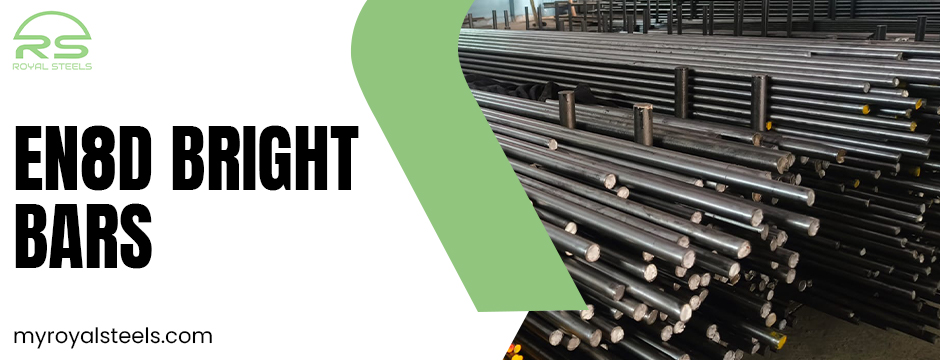
Choosing the right supplier for EN8D bright bars is not just about price. It is about consistency, mechanical reliability, and dimensional accuracy. Procurement teams in automotive, heavy engineering, and transmission manufacturing often require detailed specifications before placing orders.
This guide explains grades, sizes, the manufacturing process, and customization options. It will help buyers make technically sound decisions with confidence.
What Makes EN8D Bright Bars Suitable for Engineering Applications?
EN8D (080A42) is a medium-carbon steel known for strength and machinability. It is widely used where high tensile properties and good wear resistance are required.
Typically, EN8D bright bars offer:
- Tensile strength around 700–850 N/mm²
- Minimum yield strength of 450 N/mm²
- Elongation of about 16%
- Hardness range of 170–255 HB
Because of these properties, they are suitable for shafts, gears, bolts, and crank components. Furthermore, their bright-drawn finish ensures better dimensional tolerance than hot-rolled steel.
Chemical Composition and Mechanical Properties
Before finalizing procurement, buyers often request a chemical composition pdf from the supplier. This document confirms material compliance.
Typical Chemical Composition
- Carbon: 0.40–0.45%
- Manganese: 0.70–0.90%
- Silicon: 0.10–0.35%
- Sulfur & Phosphorus: Maximum 0.05%
This balanced chemistry provides strength without sacrificing machinability. Consequently, the material performs well in precision engineering environments.
Mechanical property verification should always be supported by mill test certificates along with the chemical composition pdf for audit purposes.
Manufacturing Process: From Hot Rolled to Bright Finish
The quality of EN8D bright bars depends heavily on processing.
The typical production method involves:
- Descaling hot-rolled black bars
- Cold drawing through tungsten carbide or high-speed steel dies
- Straightening
- Cutting to the specified length
- Optional stress-relieving or heat treatment
Cold working improves dimensional accuracy, straightness, and surface finish. Specifically, it enhances tolerance control, which is essential for bearing fits and shaft applications.
Unlike black bars, bright drawn steel undergoes additional finishing. This makes it more suitable for precision components.
Available Sizes and Standard Lengths
Understanding size availability is crucial when planning machining operations.
Standard Bright Bar Sizes
- Diameter range: 4 mm to 90 mm
- Common commercial range: 4 mm to 76 mm
- Popular small sizes: 6 mm to 12 mm
- Standard length: Approximately 3 meters (118 inches to 3000 mm)
For specific requirements, suppliers can offer cut-to-length options.
Round Bright Bars for Precision Machining
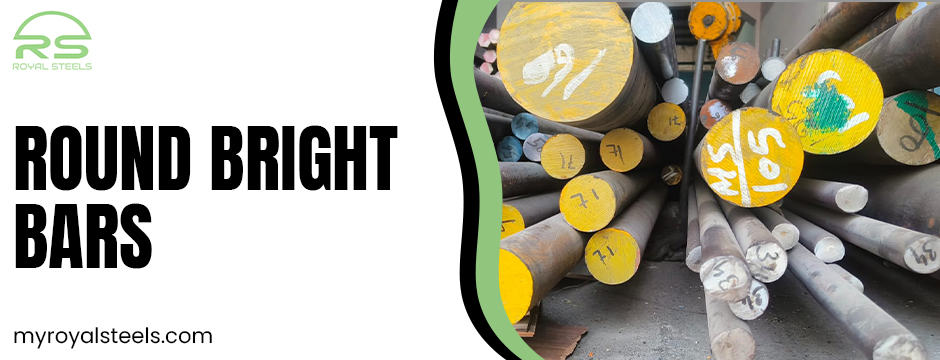
Among different profiles, round bright bars are widely used for shafts, bolts, and rotating parts. They are available in small diameters for nut bolts as well as larger diameters for heavy-duty shafts.
Many OEMs prefer round bright bars because they meet transition fit tolerance requirements for bearings.
Profiles Beyond Round: Square, Hex, and Strip
While round profiles dominate the market, other shapes serve different applications.
Square Bright Bars
- Size range: 4 mm to 61 mm
- Suitable for material handling rails
- Good fatigue resistance
Hex Bright Bars
- Size range: 6 mm to 120 mm
- Yield strength up to 80% higher than hot-rolled steel
- Ideal for fasteners and industrial hardware
Strip Bright Bars
- Sizes from 10 × 6 mm to 25.4 × 98 mm
- High tensile strength
- Used for galvanized components
Although round bright bars are common, selecting the correct profile ensures machining efficiency and material optimization.
Customization Options for Industrial Buyers
Every manufacturing setup has unique requirements. Therefore, customization becomes essential.
Suppliers typically offer:
- Custom cut lengths
- Specific tolerance requirements
- Heat-treated condition
- Peeled or ground finish
- Special packaging for export
- Batch traceability documentation
Additionally, buyers may request a chemical composition pdf along with hardness reports for internal quality validation.
When ordering large volumes, discuss dimensional tolerances clearly. This avoids rejection during inspection.
EN8D Bright Bars vs Black Bars
Many procurement teams ask whether black bars can substitute bright bars. Black bars are hot rolled at temperatures above 1700°F. They have a dark blue surface and comparatively lower dimensional precision.
On the other hand, EN8D bright bars are cold worked. This provides:
- Improved surface finish
- Better straightness
- Higher-dimensional control
- Reduced machining allowance
Therefore, for applications like conveyor shafts or crank components, bright bars are generally preferred.
Industry Applications Across Sectors
The versatility of EN8D bright bars allows usage across industries.
Automotive Industry
Used for:
- Transmission shafts
- Studs and bolts
- Engine components
Heavy Engineering
Common diameters include 50 mm, 63 mm, and 76 mm for machinery parts.
Textile Machinery
Sizes around 38 mm and 40 mm are frequently specified.
Oil and Petroleum
Bars in 20 mm and 22 mm diameters are used in equipment fabrication.
Defense and Mining
Medium to large-diameter bars serve high-stress structural components.
Round bright bars are particularly important in rotating systems and gear assemblies.
Surface Finish and Corrosion Considerations
Bright bars may develop rust if exposed to moisture. However, applying protective oil enhances resistance during storage and transit. Cold drawing affects surface finish but does not directly change corrosion properties. Therefore, proper storage practices are recommended.
When exporting, always confirm the packaging method and rust preventive measures with the supplier.
Documentation and Quality Control
Reliable suppliers maintain strict quality checks throughout manufacturing.
You should expect:
- Mill test certificate
- Mechanical test report
- Dimensional inspection report
- Chemical composition pdf
- Batch traceability
These documents ensure transparency and reduce risk in high-value industrial procurement. Furthermore, advanced manufacturing facilities use calibrated measuring instruments to maintain tolerance consistency.
Selecting the Right EN8D Bright Bars Supplier
Choosing a supplier requires technical evaluation.
Consider the following:
- In-house cold drawing capability
- Heat treatment facilities
- Quality control systems
- Customization flexibility
- Supply chain reliability
- Experience in your target industry
Request sample inspection reports before placing bulk orders. This allows validation of dimensional and mechanical parameters.
Precision You Can Trust – Royal Steels
At Royal Steels, we manufacture high-performance bright steel bars designed for demanding industrial applications. We specialize in EN8D and other engineering grades, offering precise dimensional tolerance, superior surface finish, and customizable sizes. Furthermore, we maintain strict quality control and provide complete documentation for every batch. From automotive shafts to heavy machinery components, we deliver reliable steel solutions tailored to your specifications, ensuring consistent strength, machinability, and long-term performance.
Final Thoughts
EN8D bright bars remain one of the most widely used medium-carbon steel solutions in engineering applications. Their strength, machinability, and surface finish make them suitable for shafts, gears, and high-stress components.
When selecting a supplier, prioritize manufacturing capability, documentation transparency, and customization support. A reliable partner ensures consistent quality across batches.
For industrial buyers seeking precision-driven bright steel solutions backed by strict quality control and customization flexibility, Royal Steels offers engineered products tailored to demanding applications. In conclusion, informed procurement decisions today lead to reliable performance tomorrow.