How to Source High-Quality Bright Steel Bars for Your Industry?

Bright steel bars are critical in various industries, including automotive, construction, manufacturing, machinery, and toolmaking. When the specifications and quality of surface finish matter, bright bars are often the best option due to their dimensional accuracy, surface finish quality, and mechanical properties. Whether dealing with high-precision machined components or reinforcing structures, the proper quality of bright bars positively affects the strength, durability, and efficiency of day-to-day operations. 

However, sourcing bright steel from suppliers comes with several issues, including inconsistent quality and certification, uncertainty about suppliers, price uncertainty, and changing global markets and demands for suppliers. As the marketplace changes and demand for products increases, companies must assess the procurement process more deliberately, considering everything. This guide will articulate how to source high-quality steel bars based on the specifications you require for your industry.

Understand Your Bright Steel Bars

Before sourcing, it is important to first identify which type of bright steel bar is most suited to your application. These bars are usually available in these common types.

  • Round Bars – Used for machining and shafts.
  • Bright Square Bars – Used for frames, grills, and supports.
  • Bright Flat Bars – Commonly used for fabrication and structural reinforcement applications.
  • Hexagonal and Special Profiles – Commonly used for specific niche designs and engineering applications.

Each of these types has specific mechanical and dimensional characteristics. Then, understanding the difference helps you articulate your needs to your suppliers, and it ensures that you do not over-specify or under-specify the material.

Define Your Technical Requirements.

Once you have selected a steel bar type, you will want to define your technical requirements:

  • Grade of Steel – Some common grades of steel are EN1A, EN8, EN24, and 1018, which you select depending on your design or engineering requirements. Your needs may be above material strength, and may also involve machinability, corrosion resistance.
  • Tolerance Level – Bright bars are manufactured to tight dimensional tolerances. Confirm that your supplier meets international standards such as ASTM, DIN or IS.
  • Surface Finish – The major advantage of steel bars is that they can have a smooth surface finish, as bright steel bars! This means you must confirm to yourself that you specify the correct polish, or surface finish level is required.
  • Hardness and Tensile Strength – These qualities are very relevant and will need to be specified in cases of Load Bearing, or where there is excessive friction.

Providing these details upfront avoids delays and ensures you receive exactly what your project requires.

Evaluate the Supplier’s Manufacturing Capabilities

Not all steel suppliers are created equal. The right supplier should have:

  • In-house Processing Facilities – including peeling, drawing, grinding, polishing, and cutting. This ensures better quality control.
  • Quality Certifications – ISO 9001, ISO 14001, or IATF certifications are indicators of consistent process management.
  • Test Equipment – Ensure the supplier conducts hardness tests, chemical composition analysis, and dimensional checks.
  • Traceability – Ask for test certificates (MTC) and batch-level traceability to verify compliance with standards.

A transparent and well-equipped manufacturer is less likely to cut corners, ensuring consistency in product quality.

Check for Customisation and Volume Flexibility
Bright Steel Bars

Different industries require different volumes, lengths, and even custom shapes. It’s beneficial to work with a supplier that offers:

  • Customised Lengths – Reduces wastage and machining time.
  • Packaging Options – Bundling, shrink-wrapping, or export-grade packing can prevent damage during transport.
  • MOQ Flexibility – For smaller businesses or prototyping needs, minimum order quantities should be negotiable.

Flexibility in service shows that the supplier is geared toward long-term partnerships rather than just transactional sales.

Evaluate Logistics and Shipping Efficiency

Timely delivery is so important to keep your production timeline on track. This is important because:

  • Lead Times – Always inquire about the typical processing and shipping timeline.
  • Inventory Availability – Suppliers who have inventory available in their warehouse will be able to accommodate your request when you have urgent need.
  • Shipping and Handling – Good Logistics means that your bars won’t be damaged in shipping when you go with quality suppliers.
  • Geographic Range – If you are a global commodity, be mindful of all relevant suppliers who have an international shipping ability and some international export experience.

Quality logistics will mitigate the risk of lost time due to unplanned delays. 

Consider Cost vs. Quality Trade-offs.

Cost is important, and at times it can be excruciating to not go after the lowest respective quote available to you; however, make sure to assess:

  • Cost Per Unit vs. Lifecycle Cost – Worried about whether the larger diameter steel will affect your production target? Pretend low-quality steel causes you to have a 50% rejection rate in production or product replacement.
  • Inflated Services – Some suppliers may have value-added services like machining, pre-cutting, or surface coating that could save time and other processes on your behalf.
  • Discounts for Bulk Orders – Negotiate pricing based on a larger quantity agreement. 

In the long run, it’s always better to invest in two or three quality options to retain value—especially when it comes to Bright Steel Bars, which perform more successfully with fewer, well-chosen alternatives.

Wrapping Up

Finding the right supplier for high-quality bright steel bars is not just about making a purchase—it’s about building a reliable partnership that supports your growth, quality standards, and timelines. By carefully evaluating product specifications, supplier credentials, customisation capabilities, and logistics, you ensure that your operations run smoothly and efficiently.

If you’re looking for a dependable and experienced source of steel bars, Royal Steels is your ideal partner. With decades of industry expertise, cutting-edge manufacturing facilities, and a commitment to precision, we offer a full range of bright bars customised to your industry’s exact needs. Whether you require small batches or large-scale deliveries, we ensure consistent quality, on-time logistics, and unmatched customer support.
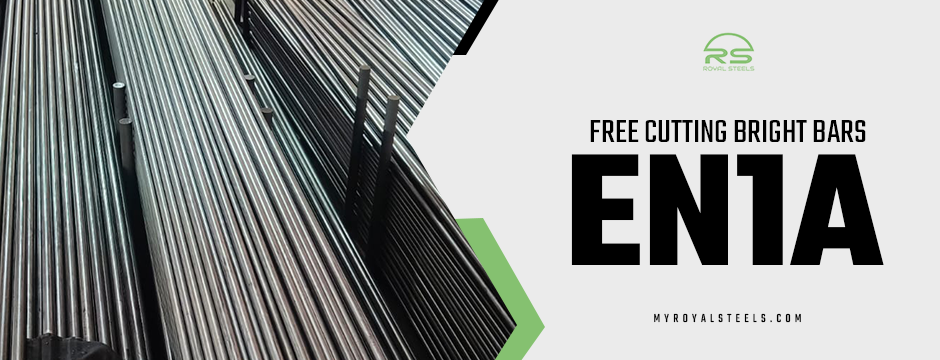
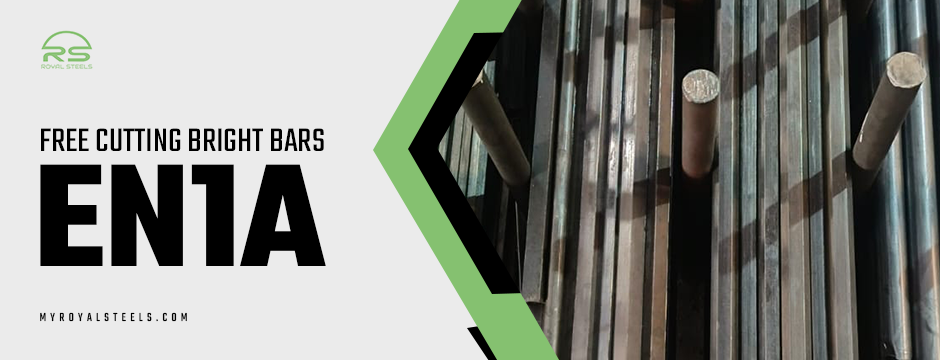
Free Cutting Bright Bars EN1A Are the Go-To Choice for CNC Machining?

CNC (Computer Numerical Control) machining plays a pivotal role in shaping this modern manufacturing landscape by enabling high-precision production of complex components across industries, from automotive and aerospace to medical devices and electronics. To achieve optimal results, however, the choice of raw material is just as important as the machine itself. That’s where Free Cutting Bright Bars, particularly those made from EN1A steel, come into the picture.

EN1A Bright Bars, also known as Free Cutting Steel, are specifically designed to deliver exceptional machinability. Their consistent dimensional accuracy, superior surface finish, and excellent mechanical properties make them a favourite among CNC machinists and manufacturers alike. Whether you’re crafting intricate mechanical components or high-volume industrial parts, Free Cutting Bright Bars EN1A help streamline production while ensuring tight tolerances and repeatable outcomes. This blog explores why EN1A Free Cutting Bright Bars are the preferred material for CNC machining. 

Excellent Machinability

The sulphur content helps to break chips more easily and allows the cutting forces to be reduced. The results? Faster cycle times, decreased tool wear, and increased production throughput. During a machine shop’s busy day with multiple work in progress and no time to waste on an unhelpful project, saving costs and providing faster service means that a shop can meet its mark.

Properties to Ensure Uniformity

Bright bars allow for very tight tolerances and dextrous dimensions, which are fundamental to CNC machining.Free Cutting Bright Bars EN1A can be produced by a variety of processes, including cold drawing, peeling, or grinding, which all provide consistent parameters to each batch.

This allows shops to simply plug and play for CNC. Operators can mount bars directly onto machines with minimal adjustments, saves time, and also saves labor.

Superior Surface Finish

This is especially true for industries like medical devices, electronics, or custom tooling. EN1A Free Cutting Bright Bars are offered with a high quality surface finish already produced in the stock material to provide you the ability to hold criteria Raj’s in finished parts with no additional finishing work (including polishing or grinding).

Having a higher quality surface finish also equates to less friction in moving parts, increased fatigue resistance, and better corrosion resistance (with coatings).

Increased Productivity and Tool Life

CNC machining operations are also heavily reliant upon the wear and use of tooling. Many times, we are still using harder materials where the tooling wears quickly, causing many tool changes that halt productivity. The Free Cutting Bright Bars EN1A allow for good and clean chip removal, which decreases the load on cutting tools. For this reason, you can expect to achieve:

  • Longer tool life 
  • Less machine downtime 
  • Lower tooling costs
  • Better consistency in part dimensions

Each of these factors leads to an increased productivity level and better part tolerances, where mutual tool changes are reduced. 

Compatibility with Automatic and High-Speed Lathes

Free Cutting Bright Bars EN1A

EN1A bright bars are very useful for automatic lathes and high-speed CNC  turning centres that require stable and consistent material to ensure a low risk of machining errors. The free-cutting properties of EN1A are exceedingly beneficial for continuous and unattended operations, which is critical for businesses that employ lights-out manufacturing techniques, where machines operate in the range of 24/7 with little to no human supervision. EN1A’s predictability and fixed qualities greatly reduce the likelihood of tool breakage, and hence, time wasted due to halting production. 

Applications Across a Variety of Industries

  • Automotive components (bushes, pins, connectors, gear blanks)
  • Electronic fittings
  • Fasteners and screws
  • Precision turned parts
  • Components of medical instruments 
  • Textile and printing machinery

Because EN1A can be drilled, milled and turned simply and in all of the above applications, allows companies a single materials supplier for many of its components, simplifying planning and inventory. 

Economic Efficiency

We shouldn’t overlook the economics. EN1A bright bars are low-priced in relation to many higher specification steels and alloys. The reduced machining time, less tool wear and less rework really make EN1A an attractive option, and there is no lack of quality or performance.

This is particularly advantageous for small to medium sized manufacturers, who need to keep their pricing competitive while maintaining quality production standards.

Availability and Standardisation

EN1A Free Cutting Bright Bars are available in a variety of diameters and lengths and comply with the BS 970 standard. EN1A Free Cutting Bright Bars are produced in different conditions (cold drawn, turned, ground). This means that manufacturers can purchase EN1A Free Cutting Bright Bars with ease rather than having to custom order, which also results in shorter lead times and easy integration into their production streams.

Wrapping Up

EN1A Free Cutting Bright Bars have proven themselves as the go-to material for achieving precision, speed, and efficiency. Their unmatched machinability, excellent surface finish, and dimensional accuracy make them ideal for producing complex parts with tight tolerances.

Whether you’re looking to scale production, reduce tooling costs, or improve the quality of your finished parts. Choosing EN1A can be a game-changer. If you’re looking for a reliable supplier of premium-grade Free Cutting Bright Bars EN1A, contact Royal Steels. We are your trusted partner in high-performance raw materials for CNC machining.

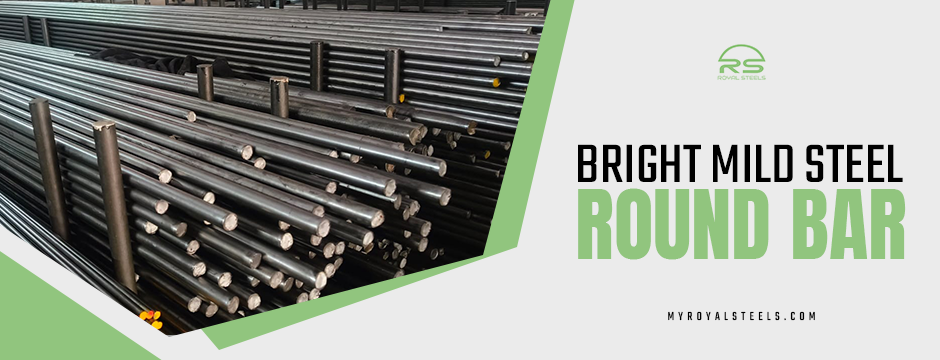
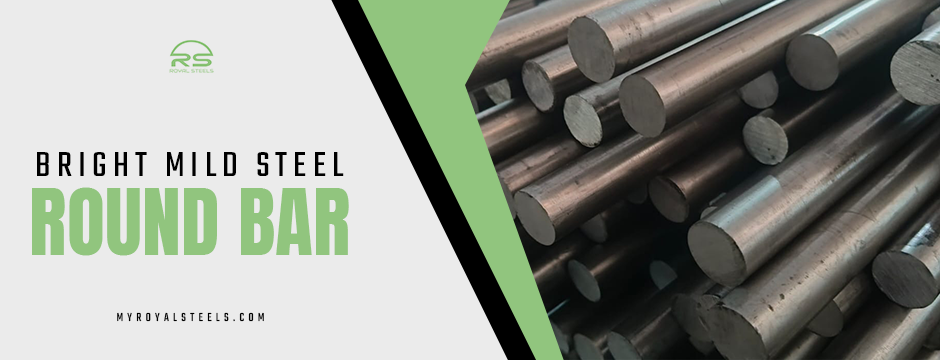
Why Choose Bright Mild Steel Round Bar for Your Next Project?

Selecting the right material is one of the most important considerations when you are in the construction, fabrication, and manufacturing world. Whether it’s a structural component, a specific component for a machine, or a decorative piece, the properties of the material (strength, finish, workability) play an important role in the performance and longevity of the projects. One very popular material, which has found its way into almost all industries, is Bright Mild Steel Round Bar. It is widely recognised for its superior surface finish, exact dimensions, and excellent machinability, making it a first choice for many engineers, designers, and manufacturers.

The cool drawing process of bright steel round bars increases the mechanical properties of the steel, and to aid that process develops a nice clean, smooth, shiny surface finish. The added value of bright mild steel, aesthetically and mechanically, is due to dramatically less oxidation, which provides a more consistent experience in the steel market segment. From the automobile sector to DIY around your home, there are unlimited uses. If you are wondering if you should use bright mild steel round bars for your project, make sure to read on for a comprehensive overview of the benefits, applications, and what makes bright mild steel hold up better than the rest.

Key Advantages of Bright Mild Steel Round Bars

Exceptional surface finish

The key selling point is the ultra-smooth, highly polished surface. This is ideal for more demanding projects where appearance is important, such as architectural or decorative components. In addition, the bright surface reduces the need for any additional machining and/or surface treatments, which saves time and money. 

Close tolerances

Appearance is one thing, but due to the cold-drawn process, these bars maintain close tolerances, both regarding diameter and roundness. This is very useful in precision engineering applications when consistency and accuracy are more important. 

Great machinability

Bright Mild Steel round bars machine cuts cleanly with low tool wear, and therefore are suitable for most types of machining operations such as turning, drilling, milling etc. Regardless of what you are making, nuts, bolts, shafts or fittings, bright mild steel round bars are ideal for quick and efficient fabrication. 

Getting a perfect bend

The ductility and formability of bright mild steel allow the bar to be bent, shaped and welded without cracking or breaking. Bright mild steel is the perfect choice for forming into different shapes and structures in construction, custom fabrication and automotive applications. 

Improved mechanical properties

The combined cold draw process improved the bright mild steel’s surface appearance and slightly improved the mechanical properties compared to regular hot rolled material. The improved tensile strength and hardness give the product a competitive performance advantage.

Common Uses of Bright Mild Steel Round Bars

Bright mild steel round bar

Bright mild steel round bars are used in a range of industries and applications because they are very versatile. Here are some applications: 

  • Automotive Parts: Axles, shafts, fasteners, and suspension components. 
  • Machinery: Gears, couplings, and precision machine components. 
  • Construction: Support bars, hand rails, fences, and framework. 
  • DIY & home applications: Furniture frames, brackets, fixtures, and artistic structures. 
  • Manufacturing: Jigs, tools and dies because they are easily machined and have a nice finish.

Whether you need strength, precision or aesthetic quality, Bright mild steel round bar provides all three in one.

Is Bright Mild Steel Round Bar Right For You?

Answer the following questions to see if it’s right for you :

  • Do you need high-dimensional accuracy?
  • Is surface finish an important factor in your project?
  • Will it undergo machining or fabrication?
  • Are you looking for a low-cost material that gives you good quality and performance?

If you answered yes to any of these questions, bright mild steel round bars is the best choice. They provide you with the best overall flexibility of cost, performance, and usability.

Maintenance and Storage Tips

When looking after your bright mild steel round bars:

  • Store them in a dry place out of the elements to avoid rusting.
  • Store the bars horizontally on racks so there is no risk of bending.
  • If you are storing for extended periods, put a light coat of oil to protect the bars from corrosion.
  • Keep your bars in a safe place to avoid damage to the polished finish.

Normal maintenance will maximise bar longevity and keep the visual and mechanical properties intact over time.

Wrapping Up

Bright Mild Steel Round Bar is an indispensable choice for projects that demand precision, a clean surface finish, and material consistency. Their superior machinability, versatility, and aesthetic appeal make them suitable for a wide range of applications—from heavy industrial use to creative home builds.

When choosing your supplier, it’s essential to go with a trusted name that guarantees quality, consistency, and timely delivery. That’s where Royal Steels comes in. As a reputed steel supplier, we offer top-grade bright mild steel round bars tailored to meet your specific requirements. Whether you need bulk quantities for industrial use or smaller orders for custom projects, we ensure high performance and reliable support.

The Role of Mild Steel Bright Steel Bars in Structural Integrity

In the world of construction and structural engineering, the selection of materials plays a critical role in ensuring safety, longevity, and durability. Among the variety of materials available, steel stands out as one of the most commonly used due to its strength, flexibility, and resilience. Particularly, Mild steel bright bars are frequently used in the construction of buildings, bridges, and other infrastructure. Mild steel and bright steel bars are an essential component of modern construction, providing a combination of strength and flexibility, which makes them indispensable in structural integrity.

This article delves into the unique properties of Mild Steel Bright Steel Bars, their various applications in the construction industry, and how they contribute to maintaining the overall structural integrity of buildings and infrastructure. Additionally, we will explore the benefits of using this material in construction, including its cost-effectiveness, ease of handling, and its ability to withstand stress, corrosion, and other environmental factors.

The Importance of Mild Steel Bright Steel Bars in Maintaining Integrity at the Structural Level

Strength and Durability

These Mild Steel Bright Steel Bars possess very good strength essential to structural integrity of a building or infrastructure project. They carry heavy loads and form the strength of structures subjected to stress such as beams, columns, and frame. Mild steels resist most deformation at strains due to their high tensile strength under load, which stabilises the entire structure.

The mild steel bars are quite durable too. They are resistant to weather, chemicals, and physical wear & tear. It made these bars advantageous for application in harsh environments, like coastal areas or heavy industrial areas with various polluting effects.

Corrosion Resistance

Mild steel can corrode when subjected to moisture and oxygen, but the bright finish on these bars minimises that risk. The smooth and polished surface reduces the chance of moisture and contaminants to the steel. Thereby reducing the chances of rust formation. These bars can also be coated with multiple materials, such as zinc, to prevent them from corrosion, too. 

The fact that bars enjoy higher corrosion resistance helps in extending the life of structures in humid or salt-laden environments. These bars guarantee that the structural components can retain their strength and function for an extended time. Until the point where repair or replacement would be economically justified.

Flexibility and Versatility

Mild Steel Bright Steel Bars

Mild Steel Bright Steel Bars use various structural elements. It includes reinforcements of concrete, as bearing columns, beams, and framework amongst others. Their capacity to bend or deflect without breaking allows them to move and shift frequently encountered objects, like a structure.

Not only do they have the flexibility, but bright bars are also easy to work with during the construction process. These bars can easily be cut, bent, or welded into any shape suitable for the needs.  As a result, they are the best choice among engineers and construction workers. It contributes to low labour costs and the fast-track establishment of a construction project, which also adds to the economy.

Knowing Cost-Efficiency 

Mild steel is the most economical material in building construction when it is reflected in terms of what it costs. For instance, it is cheaper than any of its other metal counterparts, like aluminium or stainless steel. It makes a good option for various budget activities.

These bars will contribute toward making structures built with them safe and usable for years, and significantly reduce maintenance and repair needs.

Sustainability

Mild steel bars contribute towards making construction sustainable. These bars can easily be recycled and reused, thus reducing the cost to bear new materials.

The builder can meet the demands of sustainability and the advantage of tough performance with the use of these bars. It makes mild steel a responsible choice for consumers to minimise carbon footprints and champion environmentally friendly building practices.

Final Notes

Mild steel bars play a crucial role in ensuring the structural integrity of buildings, bridges, and other infrastructure. Their combination of strength, durability, flexibility, and cost-effectiveness makes them a vital component in the construction industry. Whether used as reinforcement in concrete, for the creation of structural frames, or manufacturing. These bars provide the necessary support to ensure that structures remain safe and functional for years to come.

If you’re looking for high-quality Mild Steel Bright Steel Bars for your next construction project, look no further than Royal Steels. With a wide products and reliable customer service, we are your trusted partner in delivering exceptional materials for your needs.

Top Uses of EN8D Bright Bars in Modern Engineering

In our fast-moving world of engineering, the need for high-performance, multi-purpose, precise materials has grown exponentially. One material that continues to come to light as an option is EN8D Bright Bar. A well-known engineering material, these bar grades are capable of giving greater mechanical properties and machinability, in addition to good surface finish and precision dimensions. These bright bars have cold finishes and are heat-treated. It can be used for multiple manufacturing and engineering products. 

Engineers use these Bright Bars day in and day out due to their ability to resist wear and tear, in addition to resisting heavy loads while under stress. As well, the precise finish of EN8D Bright Bars requires no additional machining or grinding of the bars, which can decrease development time and fabrication costs! In this blog, we will examine some of the common applications for EN8D Bars in various industries. 

Automotive Industry Uses

The automotive industry is one of the largest markets for bright bars. These bright bars helps produce key components, like:

  • Shafts and axles: EN8D bright bars have been designed to withstand continuous use in components like transmission shafts and axle shafts where there is a continuous load or stress.
  • Gears and crankshafts: EN8D bars are ideal for gears and crankshafts because of their hardness and resistance to wear. 
  • Connecting Rods and studs: Precision and reliability of performance are important, and EN8D has the dimensional stability needed for parts like pins and studs, where the performance of the pin or stud must remain consistent over time.

The fatigue resistance improved performance both in high-performance vehicles and commercial transport systems.

General Engineering & Machinery

EN8D bars are used in the mechanical parts production in general engineering. Areas of use include:

  • Machine parts: Levers, spindles, couplings, and other rotating parts require toughness and wear resistance, which the material provides.
  • Hydraulic Systems: EN8D can be used for hydraulic rod applications, where it can handle pressure without deformation.
  • Fixtures & Jigs: Their smooth finish and machinability help create precision fixtures in CNC machining and fabrication setups.

EN8D bars also have machinability. It allows for custom parts with intricate details. It makes it flexible to manufacturers who require flexibility in design.

Construction and Structural Applications

Bright bars are not directly used in construction. It is used in materials like rebar and structured steel, and several structural parts:

  • Support structures: Bright bars were often used as a support where the loading required is high, and used for supports in both temporary and permanent constructions.
  • Fasteners and anchors: EN8D is often used to manufacture reliable fasteners and anchor bolts as it holds threads well and has good shear resistance.
  • Custom fabrications: Most construction tools and components are made from EN8D because of its ideal balance of ductility and strength.

Bright bars are used in heavy-duty construction facilities. It is because of its fabrication and welding abilities. It is used for custom steel frameworks and as reinforcement in concrete.

Tool and Die Manufacturing

EN8D Bright Bars

Tool and die manufacturing requires materials that provide high wear resistance and deformation resistance. EN8D bars provide an excellent combination of hardness and machinability, which suits their applications, including:

  • Punches and dies: These tools are likely to be employed in forming and cutting operations, and as example, the wear resistance of the EN8D will provide good craftsmanship in the preformed shapes and forms.
  • Jigs and fixtures: These parts are made to tight tolerances and therefore are susceptible to failure, which can be avoided by using bright bars.
  • Cutting tools: cutting tools will apply stress to greater levels during the machining and other processes, thus it is still important to take stock of toughness and edge retention relative to the process, both of the later can be had with the material EN8D.

The dimensional accuracy of the bars also lessen efforts of the machined preparation parts. Therefore, reducing the time and disparate material costs per end production item.

Defence and Aerospace Components

Although aerospace and defence industries rely on specific alloys, EN8D bars can still be used for:

  • Ground gear: For example, landing gear mechanisms, support braces, and shock-absorbing components.
  • Weapons: A shaft, pins, and mechanical parts in defense tools that need rigidity and reliability.
  • Structures: It is used in military vehicles and aircraft because these bars are strong and fabricated. It can be used in non-critical structural assemblies.

EN8D is suitable for parts subject to mechanical impact and vibration.

Wrapping Up

The bright bar continues to be an essential material in engineering because it combines strength, machinability, and surface finish. Whether you’re building a high-speed automobile, designing a precision machine, or fabricating construction components. EN8D bright bars deliver the consistency and performance modern industries demand.

As industries grow more demanding in terms of quality, safety, and cost-efficiency, choosing the right materials becomes critical. Bright bars have proven their worth in this space, time and again. For those looking to source high-quality bright bars that meet the highest standards of precision and durability. Royal Steels is your go-to partner. Our commitment to excellence and a range of bright bars make us a trusted name in the engineering materials industry.

Common Myths About Free Cutting Bright Bars EN1A—Debunked!

Cutting Bright Bars EN1A are used in multiple industries for their machinability, finish, and reliability. It is made from low-carbon steel, then treated to achieve a shiny, smooth finish and dimensional tolerances. Their strength lies in their formability, machinability, and ease of use with automatic lathes and CNC machines.

Despite their widespread use, there are numerous misconceptions surrounding EN1A Bright Bars. Whether it’s myths about their durability, corrosion resistance, or welding capabilities, misinformation can lead buyers to make poor material choices. These misunderstandings can result in compromised performance, unexpected costs, and inefficiencies in production processes. In this blog, we’ll address and debunk the most common myths surrounding Free Cutting Bright Bars EN1A.

EN1A Bright Bars Are Weak and Sensitive

The general misconception regarding low-carbon steels like EN1A is that they are weak. However, while it is very true that EN1A is not for heavy-load structural applications, it is certainly not weak. These bars are made specifically for excellent machinability, not brute force. EN1A performs very reliably under high-speed machining conditions in which consistency and dimensional accuracy outweigh the need for integral tensile strength. However, for strength and machinability, there are other more balanced alternatives like EN1A Leaded (EN1A L).

EN1A Do not Support Welding

One of the most common preconceptions. EN1A steel indeed has very little weldability when compared to other steels because of the high sulfur content present in the steel. However, if one uses proper techniques, it is possible to weld it. Some of these are specialised low-hydrogen electrodes and pre-treatment before welding. However, EN3B or EN8 would be best as far as applications are concerned. All premised on the fact that the right materials should be used as per job requirements, since EN1A requires proper treatment if welding has to be done.

EN1A Bright Bars are Rusting Only: Fiction:

Free Cutting Bright Bars EN1A, like all carbon steels, are prone to rust when allowed to remain in humid or corrosive conditions. Nevertheless, it would be inaccurate to say that they readily rust. With proper handling, maintenance, and with applications of a protective coat like an oil bath, phosphate coating, a galvanised layer, and anodization drastically increase the life span. When they operate in a controlled environment, no corrosive reaction takes place. That is, while being exposed to humid conditions along with a variety of other factors.

Bright Bars With Free-Machining Power Do Not Support High Volume Production

On the contrary, the EN1A label is of high frequency. With excellent machining characteristics available, improved machining speed, together with less tool wear and less unproductive time, is achievable. It is natural to be the preferred choice for large batches/production in the automotive, electronic, and general engineering realms. If you put such a lot of emphasis on speed and consistency, then staying true to EN1A Bright Bars is a big bonus, not a mistake.

EN1A Bright Bars are all the Same

Neither are all EN1A Bright Bars alike. The quality can differ based on the method of the consumer, the raw material selection, and the post-processing treatment. Inferior suppliers pose a puzzle for the correct dimensions or finishing of the surface, or the performance of the mechanics. Always consult the certified suppliers for the industry standards concerning themselves with the high-grade property material of fairly reliable attributes.

EN1A L (Leaded) and EN1A Are The Same

EN1A L & EN1A are similar in composition; the addition of lead to the EN1A L improves machinability. It is designed for high-speed operations, and there are minimal differences in surface hardness and tool wear. It cannot be directly substituted in environments where lead is prohibited due to environmental or safety regulations. Check the project specifications before swapping one in place of the other.

Bright Bars Are Overpriced Compared to Black Bars

EN1A are indeed more expensive than untreated black bars-and for good reason. You are paying for added accuracy, improved surface finish, and much better dimensional control. All of these features equate to less machining time and less wastage of material; hence, it becomes cheaper in the long run. For applications in which a good finish and tight tolerances are necessary, investment in Bright Bars is justified and is, in fact, often the more economical choice.

Wrapping Up

Understanding the true properties of Free Cutting Bright Bars EN1A can save you time, money, and production headaches. These bars offer unmatched performance for automated machining, precision components, and high-volume manufacturing. Apart from myths, the reality is that EN1A remains a top choice for a wide array of industries.

For the premium-grade EN1A Bright Bars made with reliable quality, precision engineering, and timely delivery, trust Royal Steels. With years of experience and a commitment to excellence, we provide industrial-grade bright bars tailored to your exact requirements. Choose us—where quality meets precision.

Is Bright Mild Steel Round Bar the Best Choice for Machining?

It is important to select the appropriate material for machining projects to ensure machining results that are accurate, efficient, and economical. There are many materials available for projects, but bright mild steel round bar has become a popular option because of its broad machinability characteristics and consistency. If you work in automotive, construction, furniture, general fabrication, fastener production or other areas, the combination of strength and workability makes this type of steel very flexible.

Bright mild steel is shaped using a cold-drawn or turned process, which yields a superb “bright” finish and tolerances with a high degree of dimensional accuracy. Expect this for machining specifications when tolerances are less negotiable. But is it the best material for machining, or could something else work better depending on the application? This blog will explore mild steel round bar to further understand the characteristics, benefits and maybe even shortcomings of using bright mild round bar in comparison with other materials commonly used for machining.

Key Characteristics That Make It Machining-Friendly

Superb Surface Finish

The smooth surface of a bright mild steel round bar decreases tool wear and friction during machining operations. This results in longer tool life and more precise cuts, especially when used with CNC machines and lathes.

Dimensional Accuracy

Cold drawing or turning enhances the round bar’s uniform diameter, thereby minimizing the need for extra finishing and reducing material waste.

Softness and Malleability

Mild steel’s lower hardness allows it to be readily cut, drilled, or milled, even into complex or intricate components.

Uniformity

Bright bars possess uniform mechanical properties which are important for high-volume production runs or parts meeting strict specifications.

Benefits of Machining with Bright Mild Steel

Affordability

Bright Mild Steel is relatively cheap in comparison to alloy steels or stainless steel, making it an excellent option for projects with budget constraints.

Quick Turnaround

Bright, mild steel machining leads to faster production times, maintaining efficiencies in manufacturing processes.

Weldable and Formable

The ability to weld the components made of bright mild steel, or to bend and perform further fabrication after machining, without compromising the integrity of the structure.

Good Strength

Although it is not the strongest steel, it is satisfactory for general engineering purposes.

Common Applications

Bright Mild Steel Round Bar are extensive across industries in:

  • Automotive components (shaft, studs, bolts)
  • Furniture manufacturing
  • General engineering Machinery parts
  • Fabrication works
  • Fasteners

The broad usage and familiarity across industries signal versatility and reliability as a machining material.

How Does It Hold up Against Other Machining Materials?

Bright Mild Steel Round Bar

Against Stainless Steel

Advantages: Easier to machine, lower cost, more ductile.

Disadvantages: Less corrosion resistant, lower tensile strength.

Versus Aluminum

Pros: Stronger, better heat resistance.

Cons: Heavier, not as corrosion resistant in many cases without coating, possibly slower machining speed in some applications.

Versus High Carbon Steel

Pros: Easier to machine, doesn’t require tooling of higher quality.

Cons: Less hardness, not appropriate for higher-stress applications.

When cherished surface finish, precision, and moderate strength, bright mild steel provides the best combination. It may not be the right choice, however, when corrosion resistance and/or high tensile strength is a priority.

Considerations When Using Bright Mild Steel Round Bar

Although bright mild steel bar excels in many machining application scenarios, it does have limitations of which to be aware: 

  • Rust: It is susceptible to rust when unprotected or untreated, particularly when exposed to humid or marine environments.
  • Less Strength: For high-load or high-impact applications, other steels may be more suitable.
  • Not Suitable for Elevated Temperature: Mild steel becomes weaker and can bend when subjected to high temperatures.

That being said, surface finishes, such as galvanizing, painting or powder coating, can greatly enhance the properties of the bright steel round bar to allow for its use in adverse conditions.

Recommendations for Machining Bright Steel Round Bar

  • Use Sharp Tools. This will minimize burring and provide a cleaner cut.
  • Utilize moderate speeds. This will reduce wear on the tool and prevent overheating. 
  • Use a lubricant. Using lubricant will increase the life of the tool and improve surface finish.
  • Look for Surface Defects. Bright bars occasionally have minor surface imperfections—always inspect the bar before machining.
  • Ensure Proper Clamping. Proper clamping helps improve the accuracy of the part and the safety of the operator.

Final Thoughts

Bright Mild Steel Round Bar is undoubtedly one of the best machining materials, offering a sweet spot between affordability, machinability, and surface finish. Whether you’re prototyping or mass-producing, their performance and ease of use can significantly boost your operational efficiency.

If you’re looking for premium-grade, bright, mild steel round bars that meet industry standards and deliver consistent results, look no further than Royal Steels. As a trusted supplier, we provide high-quality materials tailored to your exact needs—whether you’re in automotive, construction, or general manufacturing. Visit our website today and explore our range of round steel bars for your machining projects. 

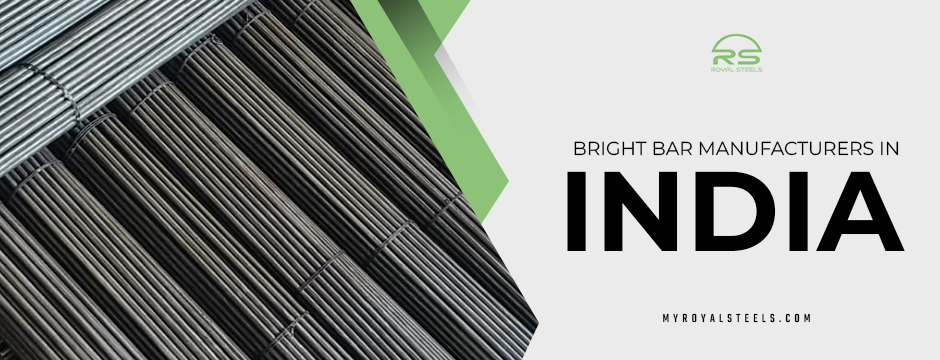
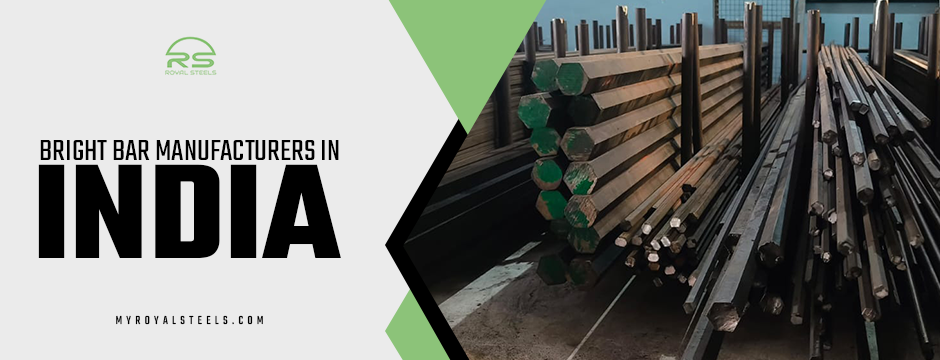
Bright Bar Manufacturers in India are Meeting Global Quality Standards

The Indian steel sector has evolved extensively over time, with the production of bright bars being one of its fastest-growing segments. Moreover, these bright bars are high-strength bars produced in a manufacturing plant. It reprocesses the steel with finishing processes giving them a superior surface quality. It can be used in industries such as automotive, aerospace, machinery, and construction. However, the demand for high-performance and long-lasting products comes from global markets. Bright bar manufacturers in India are focusing on bringing their production processes to internationally recognized quality standards.

In the globalized trade environment, Indian manufacturers now have the additional challenge of developing their products to meet the rigorous national quality standards. Or developing their products to meet the national standards of increasingly discerning international markets. Meanwhile, consider the importance of costs and consistency within their production capacity. Indian bright bar manufacturers have made considerable financial investments in technology, processes, and quality control improvements. It helps them meet and now routinely exceed the quality expectations of their international clients. 

Implementing International Standards

The bright bar manufacturers in India are increasingly adopting ISO 9001, ASTM, and DIN (Deutsche Industrie Norm) as international standards. This helps them ensure their products meet rigorous quality standards. International standards elevate the quality of products, covering everything from the desired physical characteristics to the delivery of raw materials and every step in between.

ISO 9001 Certification

This is one of the most recognized quality management systems throughout the world. Obtaining certification for ISO 9001 indicates to potential customers that this manufacturer is dedicated to the quality of their products. The certification also helps ensure controlled quality. A manufacturer of bright bars has to have a reliable, long-term product.

ASTM Standards

The ASTM sets standards for steel work to establish a global standard for the standard of steel.  Indian manufacturers that conform to ASTM standards are positioned to export products on a global scale. Complying with ASTM standards guarantees that the bright bars will pass the highest caliber of mechanical properties. It includes tensile strength, hardness, or corrosion resistance.

DIN Standards

German DIN standards specifically apply to industries that require extreme precision, i.e, automotive and aerospace. Hence, Indian manufacturers are now beginning to implement DIN standards. As a result, it helps them in improving the quality of their products that meet the standards for industries.

Developments in Manufacturing Technology

Indian manufacturers are now able to meet international quality standards due to technological advancements. Modern production methods and state-of-the-art equipment enable manufacturers to create bright bars with more consistent dimensions and quality. Meanwhile, with the use of automated systems, there will be more precision with human errors. It includes robotic polishing and finishing equipment, which further guarantees the constant quality of the finished product.

Bright bar manufacturers in India

Bright Bar Manufacturers in India are also spending money on new technologies to enhance the actual steel-making process. Vacuum arc remelting (VAR), for instance, produces steel of superior quality with fewer impurities. Bright bars are used in vital applications, like aerospace or medical devices, where the quality of materials is very crucial.

Inspection and Quality Control

Manufacturers adhere to strict quality control procedures, and that adherence to are among the most important elements. It influences their ability to compete globally. Raw material selection is the first step in quality control. As a result, materials are thoroughly tested to ensure they meet the necessary specifications. On the other hand, suppliers are carefully selected based on their capacity to deliver premium steel.

At different stages of manufacturing, inspection and monitoring are done. The stages are rolling, drawing, and finishing. Meanwhile, to ensure that only high-quality products proceed, advanced inspection methods are used in the early detection of any flaws.

Dedication to Sustainability

Indian bright bar producers are concentrating on lessening the environmental effect of their operations as environmental sustainability gains international attention. Energy-efficient furnaces and recycling systems are examples of environmentally friendly technologies that manufacturers are implementing to cut waste and energy use. As a result, it not only enables them to meet ever-tougher environmental standards but also attracts clients who value sustainable supply chains.

End Notes

Bright bar manufacturers in India have made tremendous strides in aligning their production processes with global quality standards. The adoption of international certifications, technological innovations, rigorous quality control measures, and a commitment to sustainability made Indian manufacturers global leaders in the bright bar industry.

By focusing on precision, consistency, and customer-specific requirements, these manufacturers can meet the high demands of international industries, making India an essential player in the global steel market. As the industry continues to evolve, the future of bright bar manufacturing in India looks promising. Due to further advancements in technology and sustainability poised to push the boundaries of quality even further. For top-notch bright bars that meet global standards, visit Royal Steels, where quality and precision are our top priorities.

How to Choose the Right Bright Steel Bars for Your Project

The bright steel bars are used for their applications in the construction, automobile, engineering, and manufacturing sectors. So, the selection of a particular type of bright steel bar should be optimally selected with proper consideration of strength, effectiveness, and cost requirements.

It provides good surface finishing, dimensional accuracy, and mechanical properties. Here are some of the standard considerations for your search for bright steel bars for any specific application.

1. Know the Varieties of Bright Steel Bars 

Different types of bright steel bars serve varying functions and applications. The more information you have about these, the better your decision-making process will be:

  • Round Bright Steel Bars: Used in machining, automotive components, and fasteners.
  • Flat Bright Steel Bars: Ideal for construction, frameworks, and brackets.
  • Square Bright Steel Bars: Commonly used in manufacturing tools and machinery parts.
  • Hexagonal Bright Steel Bars: These are widely used in the manufacturing of nuts, bolts, and other fastening devices.

2. Grade of Material Needed

A bright steel bar typically requires carbon steel, bright steel, mild steel, high carbon steel, and leaded steel, with the option to use carbon tool steel as well.

  • Mild Steel (MS): Steel is generally used for a wide variety of engineering settings due to its weldability and machinability. 
  • Carbon Steel: Offers higher strength and durability. It is ideal for heavy-duty applications.
  • Alloy Steel: Contains elements like chromium and nickel to enhance strength, hardness, and corrosion resistance.
  • Stainless Steel: It provides excellent corrosion resistance and is used in food processing, medical, and marine applications. 

3. Stipulate Dimensions and Required Tolerances

Important aspects are selecting the appropriate dimensions and tolerances for the successful implementation of your project. Various diameters, thicknesses, and lengths of bright steel bars are available. Some of the factors are:

  • Length: A standard length of bright or carbon steel bar lies between 3-6 meters; depending on a specific order, lengths can be changed or specifically designed.
  • Diameter/Thickness: The diameter or thickness selected should relate to your load-bearing requirements.
  • Tolerances: If tolerances are of utmost precision to be employed, pick a bar within those described tolerances. 

4. Surface Finish and Quality

One of the main advantages of bright steel bars over black steel bars is their superior surface finish. Consider the following aspects:

  • Smoothness: Quality bright steel bars are smooth, which reduces additional machining.
  • Rust Prevention: Look for bars with protective coatings if corrosion resistance is a priority.
  • No Defect Finishing: Surface finishing should be free from defects such as cracks, scales, or rough patches.

5. What Mechanical Properties Are Needed?

The mechanical properties of the bright steel bars are intimately connected with their applications and service life. Consider the following factors:

  • Tensile Strength: The level of ability to resist stretch or pulling.
  • Yield Strength: The amount of stress the material can endure before it permanently deforms.
  • Hardness: This is an important factor for wear resistance and durability.
  • Ductility: The property of a material that enables it to be stretched into thin wires or sheets without actually breaking.

6. Confirm Heat Treatment and Processing Requirements

Depending on the actual application, bright steel bars can have specific requirements for the heat treatment. The most general are as follows:

  • Annealing: Decreases hardness and increases ductility for machinability.
  • Normalizing: Improvements in toughness and strength.
  • Tempering: To improve wear and impact resistance.
  • Hardening: Increased material strength and durability.

7. Weigh the Environmental and Corrosion Resistance Needs

In a situation where your application is contacted by moisture, chemicals, or really different climates and environmental situations, choosing bright steel bars resistant to corrosion would be a prerequisite. The following alloy steels or stainless steels could be excellent choices for such applications.

  • Indoor application: Mild steel and/or carbon steel will suffice.
  • Outdoor or marine application: Recommend using stainless steel or coated bright steel bars that resist rust and corrosion.
  • Chemical exposure: Select bars with higher nickel or chromium content. 

8. Verify Bright Steel Bars Supplier Quality & Certification

bright steel bars

A credible supplier will always supply high-quality bright steel bars that meet the industry standards. They should include: 

  • Certification: ISO, ASTM, or any other certification per industry standards. 
  • Material Testing Reports: Verification of whether the supplier maintains test reports of chemical composition and mechanical properties.
  • Reputation and Reviews: You can verify on the internet for customer reviews and testimonials to determine reliability and quality.

9. Cost-Effectiveness Evaluation

While quality should not be compromised, cost-effectiveness is also an essential factor in choosing the right bright steel bars. Consider the following aspects:

  • Bulk Discounts: Buying in bulk means a lower cost for each item.
  • Long-Term Durability: High-quality bars can be costly, but they can save you money on replacement and repair.
  • Supplier Comparison: To find the best price-quality ratio, compare different sellers.

10. Proper Handling and Storage

The bright steel bars must have the ability to last longer and have their quality preserved in any normal circumstance by proper handling and storage. The following are the good housekeeping practices:

  • Keep Dry Store will prevent rust and corrosion.
  • Use protective coating oil or anti-rust coating when required.
  • Antistack or elective prevents bending and warping of grades.

Handle with care; lifting and transporting techniques should obviate the possibility of damaging the surface.

Conclusion

There are many considerations for determining the best bright steel bars to use in any project. From the kind of material to surface finish and mechanical properties, as well as environmental conditions, one needs to assess the project requirements well before committing to a reliable supplier. The right bright steel bars would improve performance whether for construction, engineering, or even manufacturing. 

Get the best quality bright steel bars from Royal Steels—all built for strength, precision, and performance that won’t fail in every project!