
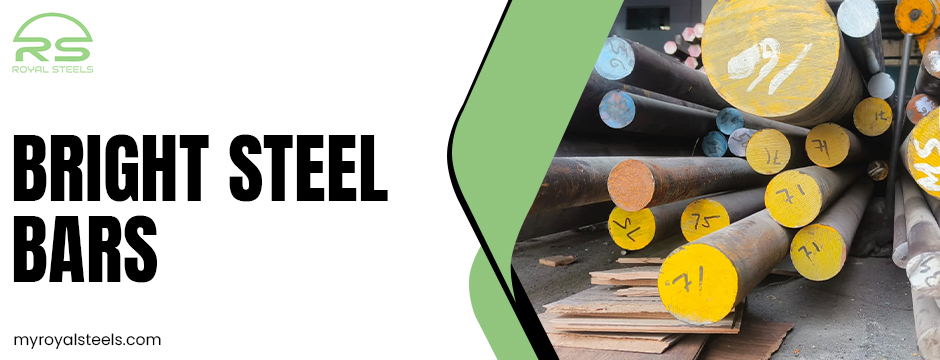
Understanding bright steel bars is essential for engineers, manufacturers, and bulk industrial buyers who need precision metal components. These bars are widely used in machining, automotive systems, and heavy engineering because of their smooth surface finish and accurate dimensions. In fact, selecting the right steel type can directly impact product performance and durability.
Furthermore, industries often compare different steel forms before final procurement. This guide explains sizes, grades, the manufacturing process, and technical properties simply. It also highlights where bright steel bars outperform conventional alternatives in real-world usage.
What Makes Bright Steel Bars Different?
The term bright steel bars refers to steel products that undergo cold drawing, peeling, or grinding after hot rolling. This additional processing improves surface finish and dimensional accuracy. Unlike rough-rolled materials, these bars offer tighter tolerances. Consequently, they are preferred in precision components such as shafts, bolts, and machine parts.
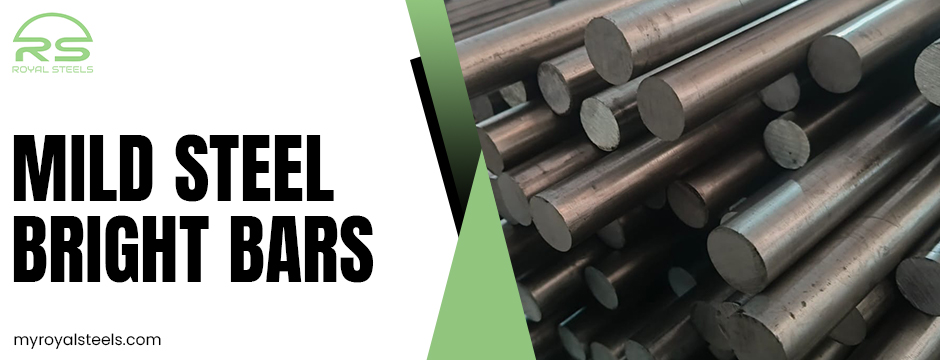
In many engineering setups, mild steel bright bars are chosen when a balance between strength and machinability is required. They are especially useful where smooth finishing reduces friction or wear during operation.
Standard Sizes and Dimensional Range
Size selection plays a critical role in industrial applications. Bright steel bars are available in a wide range of diameters to suit different mechanical needs. Typically, sizes vary from small precision rods used in fasteners to larger bars used in structural machining. Smaller diameters are common in automated production lines, while medium sizes are widely used in fabrication units.
Furthermore, tolerance levels are tightly controlled during manufacturing. This ensures consistency across batches, which is crucial for mass production systems.
On the other hand, mild steel bright bars are often preferred in mid-range size categories due to their adaptability and cost efficiency.
Common Shapes and Their Engineering Uses
Different shapes serve different mechanical purposes. Round, square, and hexagonal profiles are the most widely used in the industry. Round bars are commonly used in rotating components. They provide uniform stress distribution, which improves durability in motion-based systems.
Square bars are selected for structural support elements. Their geometry allows better grip and stability in assemblies. Hexagonal bars are ideal for fastening applications. Their shape provides better torque handling during tightening operations.
Additionally, bright steel bars are frequently customized into strips or special profiles based on engineering requirements.
Manufacturing Process and Technical Precision
The production of bright steel bars involves multiple controlled stages to ensure high accuracy. First, raw hot-rolled steel is descaled to remove surface impurities. Next, it is drawn through precision dies under controlled pressure. This improves surface smoothness and dimensional consistency.
After drawing, the bars are straightened and cut to the required lengths. Each stage is monitored to ensure strict quality control.
Consequently, the final product offers better mechanical reliability compared to untreated steel. This is one reason why mild steel bright bars are widely used in industries requiring repeatable precision.
Steel Grades and Material Selection
Steel grading determines hardness, strength, and application suitability. Globally, thousands of steel grades exist, but only a few are commonly used in industrial bar production. Carbon steel grades are widely used due to their balance of strength and machinability. Alloy grades offer higher wear resistance and are preferred in demanding environments. In addition, tool steel variants are used for high-stress applications such as cutting tools and dies.
Selecting the right grade ensures long-term performance. For instance, bright steel bars made from alloy compositions are ideal for high-load mechanical parts, while mild steel bright bars are suitable for general engineering and fabrication work.
Mechanical Properties and Performance Benefits
One of the key advantages of bright steel bars is their superior surface finish. This reduces friction and improves movement efficiency in mechanical systems. They also offer excellent straightness, which is critical in rotating equipment. Furthermore, improved dimensional accuracy reduces the need for secondary machining.
Another important benefit is consistent strength distribution. This ensures reliability under load-bearing conditions.
On the other hand, mild steel bright bars provide good weldability, making them suitable for structural assemblies and fabrication projects.
Applications Across Industries
These steel bars are used across multiple industrial sectors. In automotive manufacturing, they are used in shafts, gears, and engine components. In construction, they support structural fittings and reinforcement parts.
Engineering workshops rely on them for machining precision parts such as bolts, studs, and spindles. Additionally, heavy machinery production uses them for components that require consistent load handling.
Because of their adaptability, bright steel bars are considered a core material in modern manufacturing systems.
Bright Steel vs Conventional Steel Bars
A major distinction lies in processing and finish. Conventional hot-rolled bars have rough surfaces and wider tolerances. In contrast, bright bars are refined through additional processing, which enhances precision.
This difference makes a significant impact in engineering applications. For example, rotating machine parts require smoother surfaces to reduce wear and improve lifespan.
In comparison, mild steel bright bars offer better cost-efficiency for applications where extreme precision is not mandatory but moderate accuracy is needed.
Key Technical Specifications
Several technical parameters define quality standards:
- Diameter range varies depending on application needs
- Surface finish is smooth and polished
- Dimensional tolerance is tightly controlled
- Straightness is maintained for machining accuracy
- Mechanical strength varies based on steel grade
These specifications ensure that bright steel bars meet industrial performance expectations without compromise.
Royal Steels – Precision Bright Steel Solutions You Can Trust
At Royal Steels, we deliver high-quality bright steel bars designed for precision, strength, and industrial performance. We focus on advanced manufacturing standards to ensure accurate dimensions, smooth finishes, and reliable durability for every application. Our products support the automotive, engineering, and machining industries with consistent quality and bulk supply capability. We also provide customized steel grades to match specific requirements. With strict quality control and timely delivery, we ensure dependable solutions for every industrial project.
Conclusion
In modern engineering, material selection directly influences efficiency and product life. Understanding grades, sizes, and technical properties helps buyers make informed decisions.
Overall, bright steel bars deliver precision, durability, and consistency, making them essential for machining and manufacturing industries. At the same time, mild steel bright bars provide a cost-effective alternative for general-purpose applications without sacrificing reliability.
When chosen correctly, both materials contribute significantly to performance-driven engineering systems. For bulk industrial requirements, Royal Steels offers reliable supply solutions with consistent quality standards and technical support for diverse manufacturing needs.
FAQs
1. What are bright steel bars used for?
Bright steel bars are mainly used in industries where accuracy and smooth surface finish are important. They are widely applied in automotive parts, shafts, bolts, gears, and machinery components. Because of their tight dimensional tolerance, they help improve performance and reduce wear in moving parts.
2. How are bright steel bars different from black bars?
The main difference is in processing and finish. Bright steel bars are cold-drawn or polished, giving them a smooth surface and precise dimensions. Black bars are hot-rolled and have a rougher finish. As a result, bright bars are preferred for precision engineering applications.
3. What are mild steel bright bars used for?
Mild steel bright bars are commonly used in general engineering and fabrication work. They offer good weldability and balanced strength, making them suitable for structural components, machine parts, and cost-efficient industrial applications.
4. What sizes are available in bright steel bars?
Bright steel bars are available in a wide range of diameters, from small precision rods to larger industrial sizes. This flexibility allows manufacturers to choose the right size for machining, fabrication, or structural requirements.
5. What makes bright steel bars suitable for industrial use?
Their superior straightness, surface finish, and strength make them ideal for high-performance applications. They also reduce the need for extra machining, saving time and production costs in industrial processes.
6. Where can I get reliable bright steel bars supply?
For bulk and customized requirements, Royal Steels provides high-quality bright steel bars with strict quality control, ensuring consistency, durability, and timely delivery for industrial buyers.