
Choosing the right steel bar is not simply about selecting a shape. The profile affects machining, component design, strength, material usage, and production efficiency. This is why buyers often compare hexagonal bright bars with round alternatives before placing an order.
Both profiles are produced for engineering applications and can offer excellent dimensional accuracy and surface quality. However, their geometry makes them suitable for different jobs. A shaft, bearing component, or axle may need a different profile from a fastener, fitting, or machined component.
So, which option should you choose? The answer depends on the component design, machining process, load conditions, and required dimensions.
What Are Bright Bars?
Bright bars are steel products manufactured to achieve a more controlled surface finish and dimensional accuracy than conventional hot-rolled black bars. They can be produced through cold drawing or other finishing processes, depending on the required specification.
Cold working also improves dimensional consistency and can enhance certain mechanical properties. However, bright steel should not automatically be considered corrosion-proof. Mild steel can still rust when exposed to moisture and oxygen unless it receives suitable protection.
The choice of profile is therefore only one part of the purchasing decision. Grade, tolerance, finish, mechanical properties, and intended application must also be considered.
What Are Hexagonal Bright Bars?
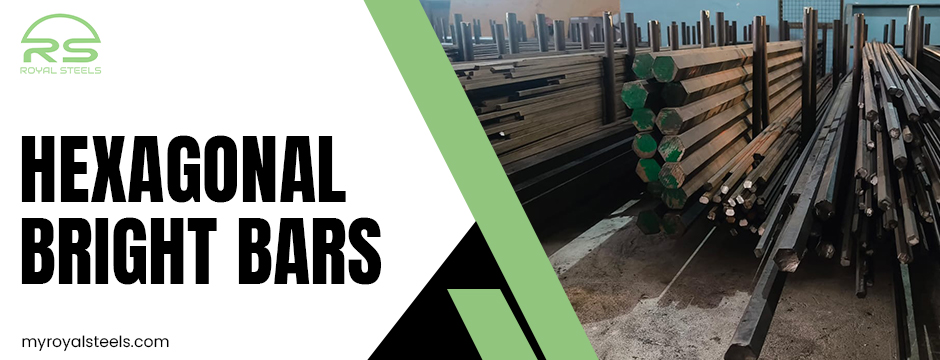
Hexagonal bright bars have six flat sides and a consistent hexagonal cross-section. This geometry makes them particularly useful where a component needs multiple flat surfaces for gripping, positioning, or machining.
They are commonly used in engineering and manufacturing environments. Typical applications include automotive components, machinery parts, fittings, fasteners, spring-related components, and other precision-machined products.
The flat faces are a major practical advantage. A tool can engage with these surfaces more easily than with a completely curved profile. Consequently, certain components can be machined efficiently without first creating a flat section.
Depending on the steel grade and manufacturing specification, these bars can provide good tensile strength, wear resistance, machinability, and dimensional consistency.
What Are Round Bright Bars?
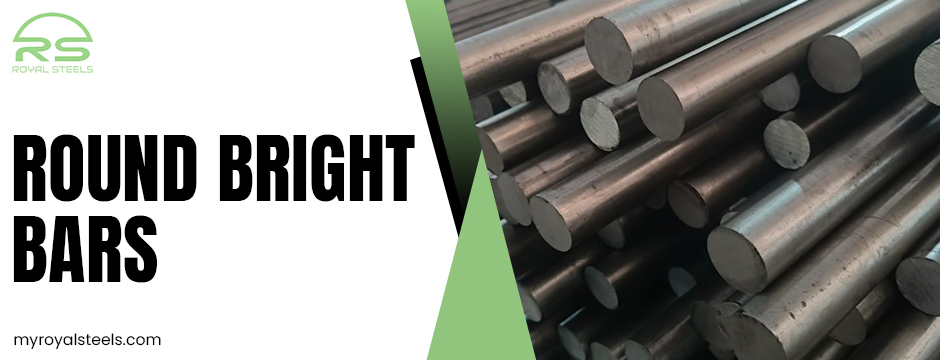
Round bright bars have a circular cross-section and are among the most widely used bright steel profiles. Their geometry makes them a natural choice for components that rotate or require a smooth cylindrical surface.
Typical applications include shafts, axles, pins, studs, gears, general-purpose machine parts, and precision components. They are also used in automotive manufacturing, where dimensional control is important for components that must fit accurately with other parts.
The circular shape distributes material evenly around the centre. This can be useful in rotating applications where balanced geometry matters.
Hexagonal vs Round: Key Differences
1. Shape and Machining
The most obvious difference is geometry. A round bar has a continuous curved surface, while a hexagonal profile provides six flat faces.
This distinction affects machining. Hexagonal material can offer convenient gripping during certain operations. It may also reduce the need to machine flats onto a component that already requires them.
Round material, however, is generally more appropriate when the finished part needs a cylindrical form. Shafts and pins are obvious examples.
2. Typical Applications
Application requirements should guide the selection.
Hexagonal bright bars are well suited to parts that benefit from flat surfaces. They are frequently considered for nuts, fittings, machined fasteners, and other components where tool access and rotational engagement are important.
Round profiles are better suited to shafts, axles, pins, rollers, and components designed around rotational movement.
Furthermore, the required finished geometry should be considered before purchasing raw material. Starting with the correct profile can reduce unnecessary machining.
3. Material Efficiency
Material efficiency depends on the final component rather than the bar shape alone.
If the finished part is cylindrical, starting with round stock can minimise material removal. Conversely, if the finished component requires several flat faces, a hexagonal profile may reduce machining work.
This can influence production time, tooling requirements, scrap generation, and overall manufacturing cost.
4. Mechanical Requirements
Profile selection should never replace proper grade selection. The steel grade determines important characteristics such as strength, hardness, machinability, and suitability for a particular operating environment.
For example, components exposed to repeated loads may require a grade selected for appropriate fatigue performance. Parts subjected to wear may need different material characteristics.
Therefore, buyers should evaluate the complete material specification rather than choosing solely on appearance.
When Should You Choose Hexagonal Bright Bars?
Hexagonal bright bars are a practical option when the component requires flat working surfaces or must be held securely during machining.
They are particularly useful for:
- Fasteners and nuts
- Machined fittings
- Automotive components
- Machinery parts
- Engineering components
- Parts requiring multiple flat faces
- Applications where convenient tool engagement matters
For example, imagine a component that needs six external flats in its final form. Starting with hexagonal stock can be more efficient than taking a round bar and machining six flats into it.
That difference may appear small on one component. Across thousands of parts, however, reduced machining can become a meaningful production advantage.
When Should You Choose Round Bright Bars?
Round stock is generally the better choice when the finished component is cylindrical or involves rotation.
Common examples include:
- Shafts and axles
- Pins and bushes
- Rollers
- Studs
- Machine components
- Shock absorber components
- Precision cylindrical parts
The circular profile also works well with turning operations. A lathe can remove material evenly around the circumference to create the required diameter and surface finish.
For rotating machinery, this geometry is often the logical starting point because the finished component can be produced without removing large amounts of material simply to establish its basic shape.
How to Select the Right Bright Bar
Start With the Finished Component
First, examine the final shape. If the component needs cylindrical geometry, round material is usually the sensible starting point. If it needs several flat faces, a hexagonal profile may provide a machining advantage.
Check the Steel Grade
Next, identify the required grade. Carbon content, strength, hardness, and machinability can affect performance and manufacturing results.
Grades such as AISI/SAE 1018, IS 1020, En8D, En1A, En18, En19, En24, and other engineering steels may serve different purposes. The correct selection depends on the component and applicable engineering specification.
Confirm Dimensions and Tolerance
Size alone is not enough. Confirm diameter or across-flats dimensions, length, dimensional tolerance, straightness, and surface requirements.
For precision components, small dimensional variations can affect assembly and performance. Consequently, buyers should match the material specification with the actual manufacturing drawing.
Consider Machining Requirements
Think about how the bar will be processed. Turning, drilling, threading, milling, grinding, and other operations can influence the most economical starting profile.
A slightly higher material price may sometimes be justified if the correct profile reduces machining time and waste.
Consider the Operating Environment
Finally, consider where the finished component will operate. Moisture, friction, repeated loading, temperature, and exposure to chemicals can all affect material selection.
Remember that standard mild steel bright bars can develop rust. Surface protection, oiling, coating, storage conditions, and the correct material treatment may therefore be necessary.
A Simple Comparison
| Factor | Round Profile | Hexagonal Profile |
| Cross-section | Circular | Six-sided |
| Best suited for | Shafts and cylindrical parts | Fasteners and flat-sided components |
| Turning operations | Highly suitable | Suitable, depending on component |
| Tool engagement | Requires suitable gripping | Naturally provides flat faces |
| Rotating components | Excellent choice | Less commonly preferred |
| Flat-sided components | Requires additional machining | Often starts close to final shape |
| Material choice | Depends on grade and application | Depends on grade and application |
Which One Should You Choose?
There is no universal winner between the two profiles. The correct choice depends on what you are manufacturing.
Choose hexagonal bars when the component benefits from six flat surfaces, efficient gripping, or reduced machining of flats. They can be especially practical for fasteners, fittings, and engineered components.
Choose round stock when the component is primarily cylindrical, rotates during operation, or requires extensive turning. Shafts, pins, axles, and similar parts commonly fall into this category.
However, at Royal Steels, we supply quality bright steel bars designed for diverse engineering requirements. Our range supports precision, durability, and reliable performance across industries. Contact Royal Steels today to discuss suitable sizes, grades, and specifications for your application.
Final Thoughts
In conclusion, the best purchasing decision comes from considering the finished geometry, steel grade, tolerance, machining route, and working conditions together. A technically suitable profile can improve production efficiency while helping maintain consistent component quality.
For buyers comparing sizes, grades, tolerances, and application suitability, hexagonal bright bars and round profiles should be evaluated against the actual engineering requirement rather than price alone. This approach helps avoid unnecessary machining and ensures the selected material fits the intended production process.
For dependable specifications and application-focused guidance, discuss your requirements with Royal Steels and explore the suitable bright steel bar options for your project.
FAQs
1. What are hexagonal bright bars commonly used for?
Hexagonal bright bars are commonly used for fasteners, nuts, fittings, automotive components, machinery parts, and precision-engineered products. Their six flat faces provide convenient tool engagement and can reduce machining when the finished component requires a hexagonal shape.
2. When should I choose round bright bars?
Round bright bars are generally suitable for cylindrical and rotating components such as shafts, axles, pins, rollers, studs, and machine parts. They work particularly well with turning operations and applications requiring a smooth circular profile.
3. How do I choose between the two profiles?
Consider the finished component first. Choose a hexagonal profile when flat faces are required. A round profile is generally more suitable for cylindrical parts. Also evaluate the steel grade, tolerance, dimensions, machining process, and operating environment.
4. Does the steel grade matter?
Yes. Grade affects strength, hardness, machinability, and service performance. The appropriate grade should be selected according to the component’s engineering requirements rather than profile alone.
5. Can bright bars rust?
Yes. Bright steel is not automatically corrosion-proof. Moisture and oxygen can cause rust over time. Proper storage, oiling, coating, and suitable surface protection can help reduce corrosion.
Profile Selection for Engineering Applications
Choosing between round and hexagonal bright bars depends on the finished component, machining process, dimensions, steel grade, and operating conditions. Hexagonal bright bars have six flat faces, making them suitable for fasteners, nuts, fittings, automotive parts, and components that require convenient tool engagement. Round bright bars, with their circular profile, are better suited to shafts, axles, pins, rollers, studs, and other cylindrical or rotating components. Selecting the appropriate starting profile can reduce unnecessary machining, material removal, and production time.
Material, Machining, and Performance
The profile is only one part of the material decision. Buyers should also evaluate steel grade, hardness, strength, machinability, dimensional tolerance, straightness, surface finish, and required dimensions. Grades such as AISI/SAE 1018, IS 1020, En8D, En1A, En18, En19, and En24 serve different engineering requirements. Machining operations such as turning, drilling, threading, milling, and grinding should also influence the selection. The right profile can improve material efficiency and help control manufacturing costs across larger production runs.
Practical Selection for Reliable Results
Round profiles are generally advantageous for cylindrical parts because turning operations can efficiently produce the required diameter. Hexagonal profiles can reduce machining when multiple flat faces are already required. However, neither profile is universally better. Operating conditions, including moisture, friction, repeated loading, temperature, and chemical exposure, must also be considered. Bright steel can still rust without suitable protection. Therefore, buyers should match the profile, grade, tolerance, finish, and protection requirements to the actual engineering application for dependable performance.