
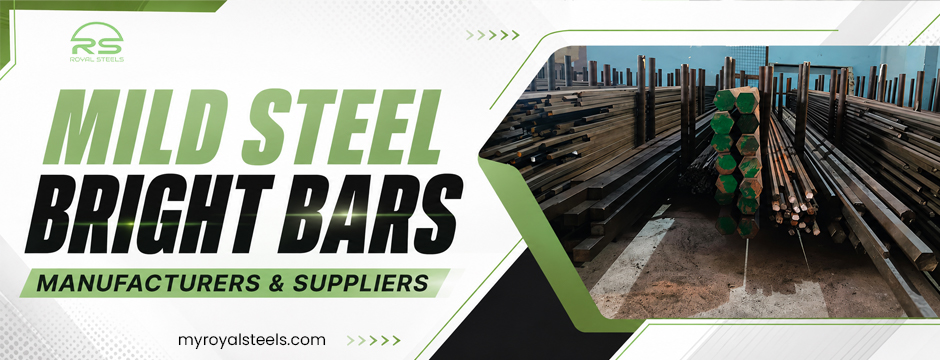
A good steel bar is not chosen by appearance alone. Its grade, surface condition, dimensional tolerance, straightness, and intended use all matter. This is why selecting the right mild steel bright bars manufacturer or supplier deserves careful attention. Mild steel bright bars are processed beyond the hot-rolled stage to achieve a cleaner surface and tighter dimensions. They are widely used for shafts, fasteners, machine parts, automotive components, and other engineered products.
What Are Mild Steel Bright Bars?
Mild steel bright bars are carbon steel products that receive additional processing after hot rolling. Depending on the required specification, the bar may be cold drawn, peeled, ground, straightened, or subjected to more than one finishing operation.
These steps improve dimensional accuracy and surface quality. They can also produce a more uniform shape and straightness than conventional hot-rolled stock. Consequently, mild steel bright bars are useful when a component needs reliable machining or a controlled finished size.
A bright mild steel bar is not necessarily a corrosion-resistant product. Its bright appearance mainly reflects its surface condition and finishing process. It should therefore be protected appropriately when exposed to moisture or corrosive environments.
How Are Bright Bars Manufactured?
The manufacturing route begins with suitable hot-rolled steel. Surface scale is removed before further processing. The material can then pass through a die during cold drawing or undergo peeling and grinding, depending on the required finish.
Cold drawing reduces the cross-sectional size while improving dimensional control. Straightening follows when necessary. The bars are then cut to specified lengths and inspected.
This process requires more than suitable machinery. Die condition, raw material quality, drawing practice, straightening control, and inspection methods all influence the final product. A bright mild steel bar intended for a precision component therefore needs consistent production control from start to finish.
Why Surface Finish Matters
Surface finish affects machining, appearance, and the suitability of a bar for certain components. A smoother surface can reduce the amount of material that needs to be removed during machining.
However, buyers should not judge quality only by visual brightness. Tolerance, straightness, chemical composition, mechanical properties, and surface defects are equally important. The correct specification should always be matched to the application.
Bright Bar vs Black Bar: What Is the Difference?
The main difference lies in processing. Black bars are generally hot rolled at temperatures above the steel’s recrystallization range. They retain a characteristic dark surface and usually have wider dimensional tolerances.
Mild steel bright bars undergo additional finishing after hot rolling. As a result, they offer improved dimensional precision and a more refined surface.
The choice depends on the job. If a component will be heavily machined or does not require close dimensional control, hot-rolled stock may be practical. If the finished part needs tighter dimensions, better straightness, or a cleaner surface, bright bar can be more suitable.
Importantly, cold working changes the condition of the steel but does not automatically make it rustproof. Both types require suitable storage and protection where corrosion is a concern.
Which Steel Grades Can Be Supplied?
A dependable supplier should understand that “mild steel” is not one universal specification. Different grades have different chemical compositions and performance characteristics.
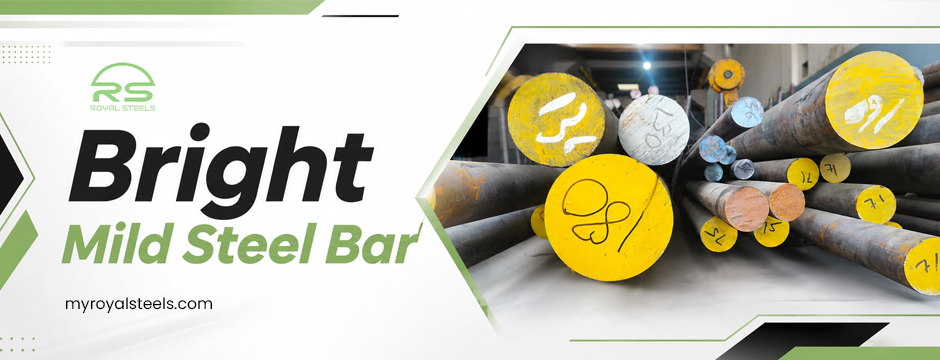
Common options can include AISI/SAE 1018, IS 1010, En8D, En1A, En18, En19, En24, En31, En9, 16MnCr5, 20MnCr5, SAE 8620, SAE 4140, and SAE 52100. Other grades may be available according to the application and purchasing specification.
Before ordering, confirm the exact grade, standard, size, length, finish, and required mechanical or chemical properties. If the bar will be used for a critical component, ask for relevant material test documentation.
For example, a shaft, gear component, fastener, and general fabrication part may require very different steel characteristics. Choosing by price alone can create machining, strength, or service-life problems later.
Common Profiles and Sizes
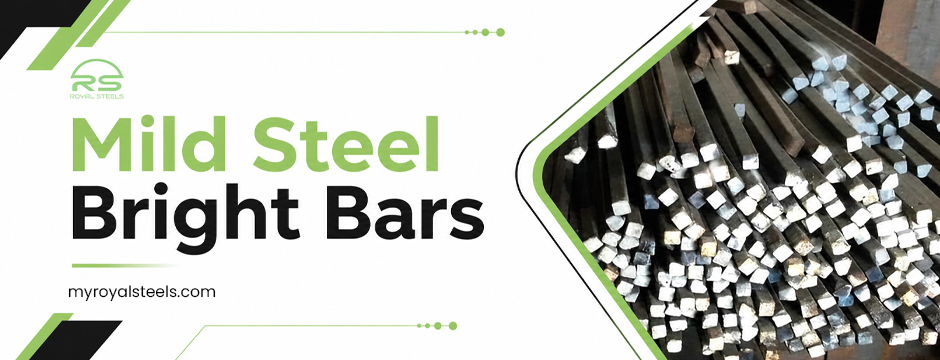
The right profile depends on the component design and machining requirements. Round bars are widely used for shafts, pins, axles, fasteners, and turned components. Square and hexagonal sections can reduce machining requirements for specific shapes.
Suppliers may offer round mild steel bright bars in small to larger diameters, with some ranges extending from around 3 mm to 100 mm. Square profiles can be available from approximately 4 mm to 61 mm, while hexagonal options may extend from about 6 mm to 120 mm.
Strip sections are also available for applications that require a flat profile. Black round bars can cover larger dimensions, with supply ranges reaching roughly 180 mm depending on the specification.
These figures are examples rather than a universal market standard. Availability varies by manufacturer, grade, process, and order requirement. Always confirm the current size range before placing an order.
What Should You Check Before Choosing a Supplier?
1. Manufacturing Capability
Start by checking whether the supplier actually understands the production process. A capable manufacturer should have appropriate equipment for drawing, peeling, grinding, straightening, cutting, and inspection where required.
2. Quality Control
Quality should be monitored throughout production, not only at dispatch. Ask how incoming raw materials are checked and how finished bars are inspected for dimensions, straightness, surface condition, and other specified properties.
3. Customisation
Industrial buyers often need non-standard lengths, grades, or dimensions. A flexible supplier can reduce unnecessary processing at the buyer’s facility. Discuss tolerances and cut lengths before production begins.
4. Consistent Supply
A technically good product is less useful if deliveries are unpredictable. Consider warehouse capacity, stock management, production planning, and distribution reach when comparing suppliers.
5. Technical Understanding
The best supplier conversations go beyond price. A knowledgeable team should be able to discuss material grades, tolerances, processing routes, and the suitability of a bright mild steel bar for a particular application.
Where Are Bright Bars Used?
These steel products serve a broad range of industries because their combination of strength, machinability, and dimensional control suits many engineered parts.
In automotive manufacturing, they can be used for nuts, bolts, shafts, engine-related components, and other precision parts. Heavy engineering applications include machine components and tools. Textile machinery, electric motors, pumps, railway equipment, agricultural machinery, and mining equipment also use suitable bar products.
They can also be found in gears, bearings, hinges, fixtures, conveyor shafts, cold-headed components, sports equipment, decorative furniture, and selected oil and petroleum applications.
The required diameter should be based on the component design rather than copied from a general application list. Load, machining allowance, operating conditions, and final dimensions should all be considered.
Questions to Ask Before Ordering
Before confirming an order, ask:
- Which grade and standard will be supplied?
- What dimensional tolerance applies?
- Is the material cold drawn, peeled, ground, or processed by another route?
- What surface finish can be expected?
- What lengths and diameters are available?
- Can non-standard sizes or cut lengths be produced?
- What quality or material documentation accompanies the shipment?
- How are the bars packaged and protected during transport?
Clear answers reduce misunderstandings and make technical comparison easier.
Precision Steel Solutions Built for Industrial Reliability
Royal Steels is a trusted manufacturer and supplier of mild steel bright bars, offering round, square, hexagonal, and strip profiles for diverse engineering needs. Its range covers bright bars from approximately 4 mm to 90 mm, along with black bars up to 180 mm and multiple steel grades.
With customized specifications, strict quality control, skilled professionals, and modern manufacturing capabilities, Royal Steels focuses on dimensional accuracy, surface finish, straightness, and dependable supply for automotive, machinery, construction, and general engineering applications.
Final Takeaway
Choosing a professional steel supplier requires attention to material grade, manufacturing method, dimensions, surface condition, quality control, and delivery capability. The right supplier should be able to match the bar to the component rather than simply offer a standard product.
For buyers seeking dependable quality and customised steel solutions, Royal Steels provides mild steel bright bars, black bars, shafting products, and multiple steel grades for industrial applications. Contact the company to discuss your required grade, profile, size, finish, and quantity before placing an order.
FAQs
1. What are mild steel bright bars used for?
Mild steel bright bars are commonly used for shafts, fasteners, pins, machine parts, automotive components, gears, pumps, agricultural equipment, and other precision-engineered products.
2. How are bright bars different from black bars?
Bright bars receive additional processing such as cold drawing, peeling, grinding, and straightening. This generally provides better dimensional accuracy, surface finish, and straightness than standard hot-rolled black bars.
3. Which grades are available?
Depending on the supplier and application, options may include IS 1010, AISI/SAE 1018, En8D, En1A, En19, En24, En31, 16MnCr5, 20MnCr5, SAE 8620, SAE 4140, and SAE 52100.
4. What should I check before ordering?
Confirm the grade, standard, diameter or profile, length, dimensional tolerance, surface finish, processing method, mechanical properties, and material documentation.
5. Can bright bars be customised?
Yes. Depending on manufacturing capability, buyers may request specific grades, dimensions, tolerances, profiles, and cut lengths to suit particular engineering requirements.
RAG Summaries
Precision and Consistency in Every Steel Bar
Selecting the right mild steel bright bars requires more than comparing prices. Grade, manufacturing process, dimensional tolerance, straightness, surface condition, and intended application all influence product suitability. Bright bars undergo additional processing after hot rolling, making them suitable for components requiring controlled dimensions and dependable machining performance. Customers should always match the bar specification to the engineering requirement and request appropriate quality documentation for critical applications.
Reliable Supply for Diverse Engineering Applications
Mild steel bright bars are available in round, square, hexagonal, and strip profiles, depending on the manufacturer’s capabilities. Their applications span automotive components, shafts, fasteners, machinery, pumps, agricultural equipment, railway products, mining equipment, and general engineering. Different applications require different steel grades and dimensions, so buyers should discuss load requirements, machining allowances, operating conditions, and finished component dimensions before finalising an order.
Smarter Buying Through Technical Evaluation
A dependable steel supplier should provide more than product availability. Manufacturing capability, inspection procedures, customisation options, stock management, delivery reliability, and technical support are important factors when selecting a supplier. Customers can make better purchasing decisions by confirming the required grade, size, tolerance, finish, processing route, documentation, packaging, and quantity in advance. This approach helps minimise specification errors while supporting consistent quality and dependable performance across industrial applications.