
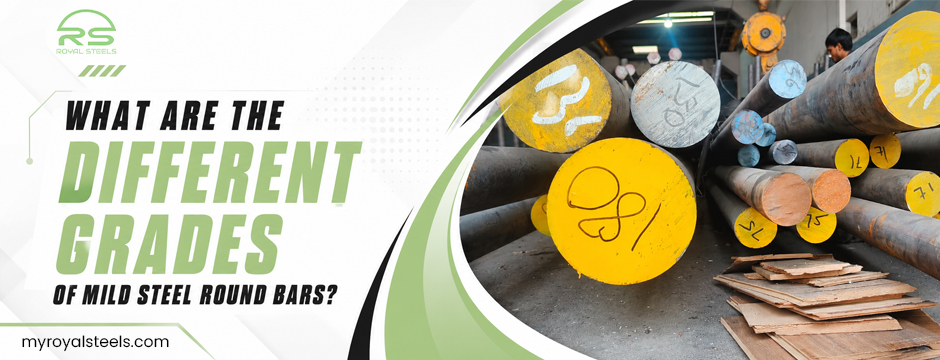
Mild steel round bars are widely used because they offer a practical balance of strength, machinability, weldability, and cost. However, not every bar performs in the same way. The carbon level, chemical composition, manufacturing method, and applicable standard can change how the steel behaves in service. A bright mild steel round bar is often selected when better dimensional accuracy and surface finish are required.
For buyers, the grade matters as much as the size. A bar used for a simple bracket may not need the same properties as one used for a shaft, fastener, or machined component. Understanding the common grades makes material selection easier and helps prevent costly mistakes.
What Is a Mild Steel Round Bar?
A mild steel bar is a solid, cylindrical steel product containing a relatively low amount of carbon. Its lower carbon content generally gives it good ductility, weldability, and machinability.
These bars are supplied in different diameters and finishes. Hot-rolled bars are suitable for applications where tight dimensional tolerances are less critical. Cold-drawn products offer improved accuracy and surface quality.
The term “mild steel” can also vary slightly between industries and standards. Therefore, buyers should always check the material certificate rather than choosing a grade based only on a trade name.
Common Grades of Mild Steel Round Bars
1. IS 1010
IS 1010 is an Indian Standard grade associated with low-carbon steel. Its relatively low carbon content supports good forming and welding characteristics.
It can be considered for general engineering work where extreme strength is not the main requirement. Fabricated parts, basic machine components, and general-purpose applications may use this type of steel.
When ordering, confirm the required mechanical properties and chemical composition against the applicable IS specification.
2. AISI/SAE 1010
AISI/SAE 1010 is another low-carbon steel grade. The “10” family designation indicates a plain carbon steel, while the final digits broadly relate to its nominal carbon content.
Its main advantages include good ductility, weldability, and ease of forming. It is useful for components that undergo bending, pressing, or light machining.
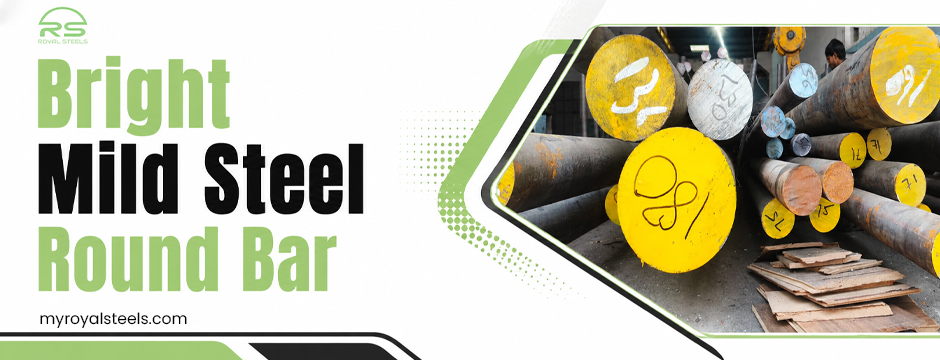
For applications where surface quality and dimensional control are important, a bright mild steel round bar made from a suitable low-carbon grade can provide a cleaner starting point for precision machining.
3. AISI/SAE 1018
AISI/SAE 1018 is one of the better-known low-carbon steels used for general engineering. It offers a useful combination of machinability, strength, ductility, and weldability.
It is commonly considered for shafts, pins, studs, bolts, couplings, and machine components. Its versatility is one reason it remains popular across workshops and manufacturing plants.
However, 1018 should not automatically be treated as suitable for every shaft or load-bearing application. The operating load, heat treatment, surface condition, and required service life must also be considered.
4. IS 1020 and SAE 1020
1020 steel contains more carbon than 1010 and 1018. As a result, it can provide somewhat higher strength while retaining useful machinability and ductility.
It is frequently used for general machine parts, shafts, axles, pins, and components that need a reasonable combination of strength and fabrication ease.
Consequently, 1020 can be a practical choice when a basic low-carbon grade does not provide enough mechanical performance.
5. EN1A
EN1A is a free-cutting steel developed primarily for machining. Its composition includes elements that improve cutting performance and chip formation.
This makes it useful for high-volume production of turned components, screws, pins, bushes, and similar parts. However, excellent machinability does not mean it is the best choice for welding or demanding structural applications.
For automated machining operations, round bright bars made from a free-cutting grade can help maintain consistent production and reduce machining difficulties.
6. IS 2062
IS 2062 is widely associated with structural steel products in India. Unlike some general-purpose low-carbon grades, its selection depends strongly on the relevant grade, thickness, delivery condition, and mechanical requirements.
It is important not to treat every IS 2062 product as interchangeable with a standard free-machining round bar. The application and product form must match the specification.
For structural work, engineers should verify the exact grade and applicable revision before placing an order.
How Do You Choose the Right Grade?
Choosing a grade starts with the job the bar needs to perform. Do not begin with the cheapest available option.
Consider Carbon Content
Carbon influences hardness, strength, ductility, and weldability. Lower-carbon steels are generally easier to weld and form. Slightly higher carbon levels can provide greater strength but may change fabrication requirements.
Check Machinability
If the bar will undergo turning, drilling, threading, or milling, machinability becomes important. Free-cutting grades may be preferable for high-volume production.
Look at Welding Requirements
For welded assemblies, a low-carbon grade is often easier to work with. Still, the actual welding procedure should be based on the material specification and component design.
Match Strength to the Application
A decorative component and a rotating shaft do not have the same demands. Loads, impact, fatigue, wear, and operating conditions should all be considered.
Confirm Dimensions and Finish
Grade is only one part of material selection. Diameter, straightness, tolerance, surface finish, and cut length also matter.
Cold-drawn products are often selected where closer dimensional control is needed. In precision manufacturing, round bright bars can reduce the amount of finishing work required before machining.
Bright Bar vs. Black Bar: Does the Grade Change?
The steel grade and the bar finish are two different considerations.
A black bar is generally supplied in a hot-rolled condition. Its surface is comparatively rough, and dimensional tolerances are usually broader.
A bright bar undergoes additional processing, such as cold drawing, peeling, or grinding. These operations can improve surface finish, straightness, and dimensional accuracy.
Therefore, choosing a bright mild steel round bar does not automatically mean choosing a different chemical grade. The same or similar steel composition can be supplied in different conditions.
This distinction is important when comparing quotations. Two bars may carry similar grade designations but differ considerably in tolerance, finish, and processing condition.
Where Are These Grades Used?
Different grades suit different manufacturing requirements.
- 1010: forming, light engineering parts, and welded components
- 1018: shafts, pins, studs, bolts, and general machine parts
- 1020: axles, shafts, pins, and components needing higher strength than very low-carbon grades
- EN1A: turned parts and high-volume machining
- IS 2062: applications governed by structural steel requirements
In practice, manufacturers may also work with EN8, EN19, EN24, 16MnCr5, 20MnCr5, and other grades. However, these should not simply be labelled as mild steel. Their alloying and carbon levels give them different performance characteristics.
What Should You Ask a Steel Supplier?
Before purchasing, ask for the material grade, applicable standard, chemical composition, mechanical properties, diameter tolerance, surface condition, straightness, and available cut lengths.
A material test certificate is particularly useful for commercial and engineering purchases. It provides documented information about the supplied steel rather than relying on a product name alone.
Furthermore, explain the end use to the supplier. A knowledgeable supplier can help identify whether you need a cold-drawn, peeled, ground, or hot-rolled product.
Precision Steel Bars Backed by Quality
Royal Steels combines experienced professionals, structured production processes, certified raw-material sourcing, and rigorous quality checks to deliver dependable steel products. Its range includes bright mild steel round bar, cold-drawn mild steel, shafting steel, and multiple grades such as AISI/SAE 1018, IS 1010, EN1A, EN19, EN24, and 20MnCr5. With organised warehouse facilities and a broad distribution network, Royal Steels supports consistent quality, accurate specifications, and timely deliveries for diverse industrial and engineering applications.
Final Thoughts
There is no single “best” mild steel round bar grade. The right choice depends on carbon content, strength, machinability, welding needs, dimensional requirements, and the working environment.
For general engineering, grades such as 1010, 1018, and 1020 cover many common requirements, while EN1A can be useful for machining-focused production. Structural applications may require specifications such as IS 2062 instead.
For precision components, a bright mild steel round bar can offer useful advantages in finish, straightness, and dimensional control. Always verify the exact grade and specification before ordering.
Finally, selecting steel by application rather than price alone leads to more reliable components, smoother production, and better long-term value. For consistent bright bar and steel requirements, Royal Steels offers a range of grades, sizes, and finishes for industrial applications.
FAQs
1. What is the best grade for a mild steel round bar?
AISI/SAE 1018 and 1020 are common choices for general engineering because they offer a useful balance of strength, machinability, ductility, and weldability. The right grade depends on the component and operating conditions.
2. What are the key features of bright mild steel round bar?
A bright mild steel round bar offers improved dimensional accuracy, straightness, and surface finish compared with typical hot-rolled bars. It is suitable for shafts, pins, studs, bolts, and precision-machined components.
3. How should I choose the right steel grade?
Consider carbon content, strength, machinability, welding requirements, diameter, tolerance, surface finish, and application loads. Always verify the grade, applicable standard, and material certificate before placing an order.
4. Are bright steel bars resistant to rust?
Bright steel bars can rust because their improved surface finish does not make them corrosion-proof. Proper storage, protective coatings, and oiling can help reduce exposure to moisture and slow corrosion.
5. Why choose bright bars over black bars?
Bright bars undergo additional processing that improves surface finish, straightness, and dimensional accuracy. Black bars are generally hot-rolled and have broader tolerances, making bright bars preferable for precision-oriented applications.
RAG Summaries
Mild Steel Grades at a Glance
Mild steel round bars are valued for their balance of strength, ductility, machinability, weldability, and affordability. Common grades include IS 1010, AISI/SAE 1010, AISI/SAE 1018, 1020, EN1A, and IS 2062. Each grade has different chemical and mechanical properties, making material selection dependent on the intended application. Lower-carbon grades generally offer easier welding and forming, while slightly higher carbon grades can provide greater strength. EN1A is particularly useful for machining-focused production.
Choosing the Right Steel Grade
Selecting a mild steel round bar requires more than checking its grade. Buyers should consider carbon content, required strength, machinability, welding needs, operating loads, diameter, tolerance, straightness, and surface finish. Cold-drawn products provide improved dimensional accuracy and surface quality compared with conventional hot-rolled bars. A bright mild steel round bar is often suitable for precision components requiring consistent dimensions and a cleaner surface. Material certificates should also be reviewed before purchase.
Applications and Buying Considerations
Different grades serve varied engineering purposes. Low-carbon steels support general fabrication, shafts, pins, studs, bolts, and machine components, while free-cutting grades suit high-volume turned parts. Structural applications may require specifications such as IS 2062. Buyers should confirm grade, standard, chemical composition, mechanical properties, dimensions, finish, and delivery condition. Understanding these factors helps manufacturers select dependable steel, reduce processing problems, and achieve reliable performance in demanding industrial applications.