
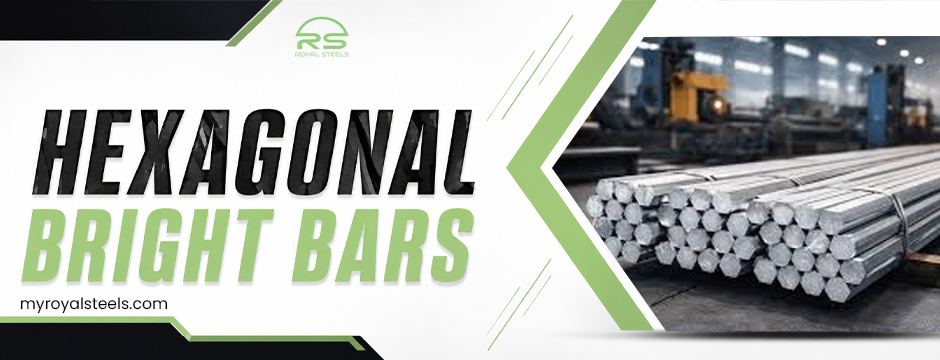
Quality is not determined by appearance alone when selecting industrial steel. It depends on material composition, dimensional accuracy, surface finish, mechanical performance, and process control. This is why hexagonal bright bars manufacturers India must maintain strict standards at every stage, from raw material selection to final dispatch.
For buyers, understanding these quality practices makes supplier evaluation easier. It also helps industries choose bars that perform consistently in machining, fabrication, and high-load applications. Furthermore, proper quality control can reduce material wastage, premature component failure, and unnecessary production delays.
What Defines a High-Quality Hexagonal Bright Bar?
A quality bar should have consistent dimensions, a clean surface, dependable mechanical properties, and suitable machinability. These characteristics are especially important when the material becomes part of a precision component.
Unlike ordinary structural steel, bright bars are generally selected where better dimensional control and surface quality are required. Their performance depends heavily on the manufacturing route and the condition of the incoming steel.
Hexagonal bright bars are particularly useful when a component needs multiple flat faces for gripping, machining, or fastening. Consequently, consistency across all six faces becomes an important quality parameter.
Dimensional Accuracy
Accurate dimensions help manufacturers maintain tight production tolerances. Even a small variation can affect machining allowances or the fit between mating components.
Quality-focused producers therefore monitor diameter, across-flat dimensions, length, and straightness. Measurement equipment must also be calibrated regularly to maintain reliable readings.
For buyers, dimensional consistency is valuable because it reduces corrective machining. It can also make automated production more predictable.
Surface Finish
The surface condition directly affects machining and the final appearance of a component. Scratches, pits, scale, seams, or other imperfections can become problematic during turning, threading, or polishing.
Manufacturers inspect the surface before dispatch. Depending on the application, buyers may also specify particular finishing requirements.
A clean surface does not simply improve appearance. It provides a better starting point for subsequent manufacturing operations.
How Hexagonal Bright Bars Manufacturers India Control Raw Materials
The quality of the finished product begins before the bar enters the production line. Reputable hexagonal bright bars manufacturers India carefully evaluate incoming raw materials according to the intended grade and application.
Chemical composition is particularly important. Elements such as carbon, manganese, chromium, and other alloying constituents influence strength, hardness, machinability, and wear behaviour.
Material Verification
Raw material verification helps prevent grade mix-ups. This is crucial when a facility handles several steel grades for different customer requirements.
Certificates from approved suppliers can provide information about chemical composition and material specifications. Additional testing may be performed when necessary.
Furthermore, proper identification and segregation of materials help maintain traceability throughout production.
Choosing the Right Steel Grade
Not every application requires the same material characteristics. A shaft, gear component, fastener, or machine part may require different combinations of strength, toughness, hardness, and machinability.
For example, low-carbon grades can be suitable for components requiring good machinability and forming characteristics. Alloy grades may be selected when greater strength or wear resistance is needed.
The correct grade should therefore be chosen according to the component’s working conditions rather than simply its price.
Manufacturing Processes That Improve Quality
Production control is another major factor behind reliable bright bars. The manufacturing route must be selected according to the required dimensions, finish, and mechanical characteristics.
Bright bars can undergo processes such as cold drawing, peeling, grinding, or related finishing operations. Each method serves a particular purpose.
Cold Drawing and Size Control
Cold drawing can improve dimensional accuracy and surface quality while also influencing mechanical properties. The process requires controlled reduction and suitable equipment.
If process parameters are poorly managed, dimensional variation or surface defects may occur. Therefore, operators need to monitor the material continuously rather than relying only on final inspection.
Straightness and Finishing
Straightness matters when bars are used for shafts, pins, precision components, and automated machining. Excessive deviation can create problems during feeding and turning.
Finishing operations help achieve the required surface condition and dimensional consistency. However, excessive processing can increase costs without providing meaningful benefits.
A practical manufacturer balances finish, tolerance, application requirements, and production efficiency.
Testing and Inspection at Multiple Stages
Final inspection alone cannot guarantee consistent quality. Effective manufacturers use checks at different stages of production.
Typical quality checks may include:
- Dimensional measurement
- Visual surface inspection
- Chemical composition verification
- Tensile testing
- Hardness testing
- Straightness inspection
- Weight and length verification
- Documentation and traceability checks
These tests help identify deviations before the material reaches the customer.
For demanding applications, additional testing may be appropriate based on the steel grade, specification, or purchaser’s requirements. The testing plan should therefore reflect actual service conditions.
Why Quality Control Matters for Industrial Applications
The practical value of quality becomes clear during machining and component assembly. Consistent bars can support smoother production and reduce unexpected adjustments.
Hex bright bars are commonly used for components such as nuts, bolts, shafts, fittings, machine parts, and other engineered products. Their six-sided profile can provide useful gripping surfaces during machining or assembly.
Automotive manufacturers, machinery producers, electrical equipment manufacturers, agricultural equipment makers, and engineering companies may require different sizes and grades.
For instance, a shafting application may prioritise straightness and surface finish. A fastener manufacturer may focus more heavily on machinability and dimensional consistency. This shows why quality cannot be judged through one parameter alone.
How Buyers Can Evaluate a Manufacturer
Choosing a supplier should involve more than comparing quotations. Buyers should examine the manufacturer’s technical capabilities and quality practices.
Ask About Material Traceability
A dependable supplier should be able to identify the material grade and provide relevant documentation. Traceability becomes especially important for repeat orders and critical components.
Check Available Sizes and Grades
Before placing an order, confirm whether the supplier can consistently provide the required size, grade, and length. Availability across multiple specifications can simplify procurement.
Review Quality Documentation
Ask about inspection procedures, testing facilities, material certificates, and quality records. Clear documentation provides greater confidence than broad claims about quality.
Consider Production Consistency
A supplier may produce an excellent sample but still struggle with repeat orders. Consequently, buyers should consider production capacity, process controls, and previous experience with similar requirements.
Quality Beyond the Finished Bar
Superior quality also depends on storage and handling. Even correctly manufactured steel can develop problems if it is exposed to unsuitable conditions or handled carelessly.
Bars should be stored in an organised environment that limits unnecessary contact with moisture and contaminants. Proper identification prevents different grades or sizes from being mixed.
Packaging also matters during transportation. Adequate protection can help preserve the surface condition until the material reaches the customer’s facility.
In addition, accurate inventory control supports timely dispatch and reduces the risk of sending incorrect specifications.
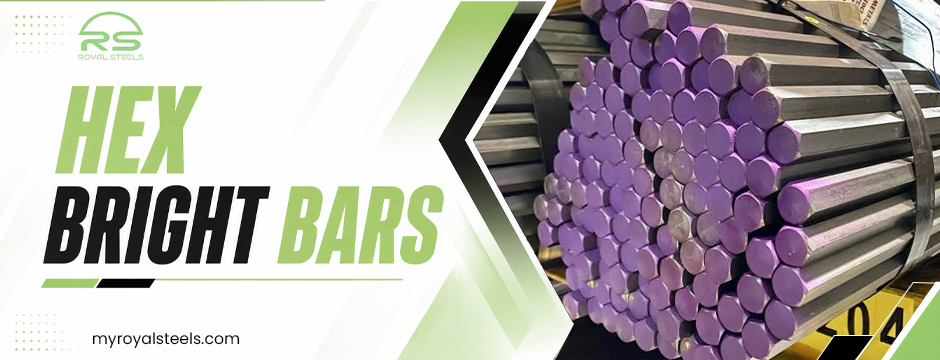
Steel Chemical Composition: Its Role in Hexagonal Bright Bars
Steel chemical composition directly influences the performance, machinability, and suitability of hexagonal bright bars. Carbon affects hardness and tensile strength, while manganese supports strength, hardenability, and ductility. Silicon primarily acts as a deoxidiser, whereas sulfur and phosphorus can improve machinability in free-cutting grades such as EN1A and EN1B. Lower-carbon grades, including EN2A and EN3, offer better weldability and formability. Meanwhile, EN5, EN6, and EN7 provide greater strength and wear resistance. Therefore, selecting the right composition helps manufacturers achieve accurate dimensions and reliable performance across applications.
Making a Better Purchasing Decision
The best purchasing decision balances technical requirements with operational needs. Buyers should first define the component’s purpose, required grade, dimensions, tolerance, surface condition, and expected working environment. For hex bright bars, these factors help ensure the material suits the intended application.
Next, compare suppliers based on manufacturing capabilities, inspection procedures, documentation, delivery reliability, and technical support.
Price still matters, but the lowest quotation is not necessarily the lowest overall cost. Material inconsistencies can lead to rejected batches, additional machining, production stoppages, and replacement expenses.
Therefore, quality should be evaluated as part of the total procurement value.
Trusted Steel Solutions from Royal Steels
Royal Steels delivers precision-engineered bright steel bars designed for demanding industrial applications. With expertise across cold-drawn mild steel, steel shafting, and hexagonal bright bars, the company focuses on consistent dimensions, reliable surface quality, and dependable mechanical performance. Its quality-led approach includes certified raw materials, systematic inspections, skilled professionals, and organised distribution. From automotive and machinery to agriculture and engineering, Royal Steels supports diverse requirements with carefully manufactured steel products. Choose Royal Steels for dependable quality, technical expertise, and responsive service.
Conclusion
Consistent steel quality comes from disciplined control rather than a single manufacturing step. Raw material verification, controlled processing, accurate measurement, testing, finishing, storage, and traceability all contribute to dependable performance.
For buyers comparing hexagonal bright bars manufacturers India, the strongest choice is a supplier that can demonstrate these practices clearly and consistently. A well-controlled manufacturing process ultimately supports better machining, dependable components, and fewer production complications.
If you are evaluating bright steel bar requirements, Royal Steels offers a range of bright steel products for industrial applications. Contact the team to discuss your required grade, size, and application.
Frequently Asked Questions
How are hexagonal bright bars quality tested?
Quality may be assessed through dimensional checks, visual inspection, chemical analysis, tensile testing, hardness testing, straightness checks, and documentation reviews, depending on the required specification.
Why is dimensional accuracy important?
Accurate dimensions help components meet design tolerances and reduce unnecessary machining. They also support consistent performance during automated manufacturing and assembly.
Which industries use these bars?
They are used in automotive, engineering, machinery, electrical equipment, agriculture, textile machinery, mining, oil and petroleum, and other industrial applications.
What should buyers ask suppliers?
Buyers should confirm steel grade, dimensions, tolerances, surface requirements, testing procedures, material certificates, traceability, packaging, and delivery capabilities.
RAG paragraphs
Why Quality Control Matters in Bright Steel Bars
Quality control is the foundation of dependable bright steel bar manufacturing. From raw material verification to dimensional checks, surface inspection, and mechanical testing, every stage influences the final product. Consistent quality helps industries achieve smoother machining, accurate component fitting, and fewer production interruptions. Furthermore, proper traceability and documentation allow buyers to verify material grades and manufacturing standards before procurement.
Selecting the Right Steel Grade
Steel composition directly affects strength, machinability, hardness, weldability, and formability. Low-carbon grades can support applications requiring better ductility and fabrication, while medium-carbon grades offer greater strength and wear resistance. Free-cutting grades are particularly useful for high-volume machining of nuts, bolts, and threaded components. Therefore, buyers should select the grade according to the component’s operating conditions rather than choosing solely on price.
Smarter Procurement for Industrial Applications
Choosing reliable hexagonal bright bars manufacturers India requires more than comparing quotations. Buyers should assess manufacturing capabilities, available sizes, inspection procedures, material certificates, traceability, packaging, and delivery consistency. Bars used in automotive, machinery, electrical, agriculture, and engineering applications may have different requirements. Consequently, evaluating technical suitability alongside supplier reliability can reduce machining losses, rejected batches, downtime, and replacement costs while supporting long-term procurement value.