
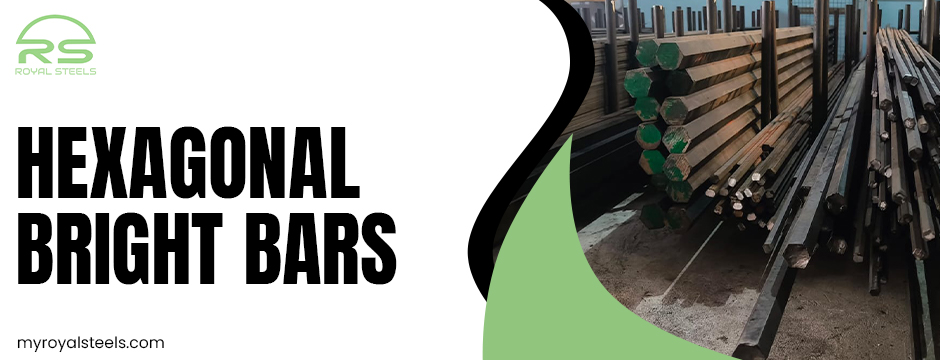
Manufacturers today demand steel products that deliver precision, durability, and consistent performance. Among the many options available, hexagonal bright bars have become a preferred choice for industries that rely on accurate dimensions and dependable mechanical properties. Their unique six-sided profile, excellent surface finish, and superior machinability make them suitable for everything from fasteners to precision-engineered components.
This guide explains their benefits, common applications, available grades, and the key factors to consider before purchasing them.
What Are Hexagonal Bright Bars?
Hexagonal bright bars are cold-finished steel bars manufactured through processes such as cold drawing, peeling, or grinding. These finishing methods improve dimensional accuracy, straightness, and surface quality compared to conventional hot-rolled steel.
The hexagonal shape provides better grip during machining and assembly, making these bars especially useful for producing nuts, bolts, fittings, couplings, and other precision components. Because of their consistent dimensions, manufacturers can reduce machining time while maintaining product quality.
Unlike standard hot-rolled bars, bright bars undergo additional processing that enhances their mechanical characteristics and creates a cleaner surface finish suitable for demanding engineering applications.
Benefits of Hexagonal Bright Bars
Selecting the right steel material directly affects product performance and manufacturing efficiency. Hexagonal bright bars offer several practical advantages that make them valuable across multiple industries.
Excellent Dimensional Accuracy
Cold finishing produces tight dimensional tolerances, allowing manufacturers to achieve precise measurements with minimal variation. This consistency helps reduce production errors and improves assembly accuracy.
Superior Surface Finish
The smooth exterior minimises the need for additional finishing operations. Consequently, manufacturers save both processing time and production costs while achieving an attractive final appearance.
High Machinability
These bars are easier to machine than many standard steel products. Cutting, drilling, threading, and turning operations become more efficient, improving productivity in machine shops.
Strong Mechanical Performance
Bright bars provide reliable tensile strength and fatigue resistance. As a result, they perform well in components that experience repeated loading and continuous operation.
Better Corrosion Resistance
Although corrosion resistance depends on the steel grade, the refined surface reduces the likelihood of surface imperfections that can accelerate wear in controlled environments.
Consistent Product Quality
Since cold finishing follows controlled manufacturing processes, every batch offers uniform dimensions and dependable mechanical properties. This consistency is especially important for large-scale industrial production.
Applications Across Different Industries
The versatility of hexagonal bright bars allows them to serve a wide range of industrial sectors.
Automotive Manufacturing
Automotive companies use these bars to manufacture fasteners, steering components, transmission parts, spacers, and precision connectors. Their dimensional stability supports efficient assembly while maintaining high safety standards.
General Engineering
Engineering workshops rely on these bars for producing couplings, bushes, machine components, hydraulic fittings, and industrial hardware where precision is essential.
Construction Equipment
Heavy-duty machinery requires components capable of handling continuous stress. Bright steel bars contribute to the production of durable mechanical parts used in cranes, loaders, agricultural equipment, and construction machinery.
Fastener Manufacturing
The hexagonal profile naturally suits the production of nuts, bolts, threaded components, and specialised fastening systems. Less material removal is required during machining, improving manufacturing efficiency.
Industrial Machinery
Factories manufacturing pumps, compressors, conveyors, and processing equipment often choose bright bars because of their consistent quality and reliable performance under demanding operating conditions.
Common Steel Grades Available
Choosing the correct material grade depends on the intended application, required strength, and machining requirements.
Mild Steel Grades
Low-carbon mild steel grades are commonly selected for general engineering applications. They provide good weldability, excellent machinability, and cost-effective performance.
EN Series Grades
Grades such as EN8D, EN18, EN19, EN24, and EN31 are widely used where higher mechanical strength or wear resistance is necessary. These grades are frequently selected for shafts, gears, machine parts, and heavy-duty engineering components.
Alloy Steel Grades
Alloy steels containing elements such as chromium, manganese, or molybdenum deliver improved hardness, fatigue strength, and durability. These materials are preferred for demanding industrial environments.
Free-Cutting Steel
Manufacturers producing high volumes of precision components often select free-cutting steel because it enables faster machining while maintaining excellent dimensional consistency.
How They Compare with Other Bright Bars
Different bar profiles serve different manufacturing needs. Understanding these differences helps buyers make informed decisions.
Round Bright Bars
Round bars remain the preferred option for shafts, rollers, and rotating equipment because of their symmetrical profile. They are ideal where circular geometry is required.
Square Bright Bars
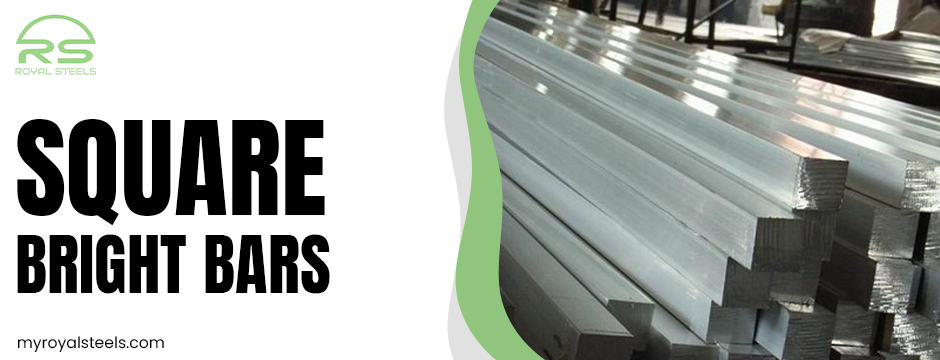
Square bright bars are commonly used in structural applications, fixtures, material handling systems, and fabrication projects. Their flat surfaces provide stability for welding and assembly operations.
Compared to square bright bars, hexagonal profiles offer better gripping characteristics during machining, making them particularly suitable for fastener manufacturing and threaded components.
Ultimately, the selection depends on component design, manufacturing processes, and functional requirements.
Buying Guide: What to Consider
Selecting the right bright steel product requires evaluating several technical and commercial factors.
Check Material Grade
Always confirm that the selected steel grade matches your mechanical and performance requirements. Different grades provide varying levels of strength, hardness, and machinability.
Verify Dimensional Tolerances
Precision applications require strict dimensional accuracy. Therefore, request tolerance specifications before placing an order.
Examine Surface Finish
A smooth, defect-free surface indicates quality manufacturing. Surface imperfections may affect machining performance and finished product quality.
Review Manufacturing Standards
Ensure the supplier follows recognised manufacturing and quality control standards. Reliable production practices lead to consistent product performance.
Confirm Size Availability
Different projects require different dimensions. Verify that the required diameter, length, and finish are readily available to avoid production delays.
Evaluate Customisation Options
Many engineering projects require custom cut lengths or specialised specifications. Working with suppliers that provide tailored solutions improves procurement efficiency.
Maintenance and Storage Tips
Proper storage helps preserve the quality of bright steel products before they enter production.
Store the bars in a dry, covered environment to reduce moisture exposure. Keep them on suitable racks instead of placing them directly on the floor. During transportation, use protective packaging to prevent scratches or surface damage.
Regular visual inspections also help identify rust, contamination, or handling damage before machining begins.
Why Bright Steel Quality Matters
Precision engineering depends on materials that perform consistently over time. High-quality bright steel reduces machining waste, minimises production interruptions, and improves component reliability.
For manufacturers producing automotive parts, industrial machinery, precision fasteners, or engineering equipment, investing in premium materials often leads to lower operating costs and improved product performance throughout the manufacturing cycle.
Similarly, while square bright bars remain an excellent choice for structural and fabrication work, selecting the correct profile for each application ensures maximum efficiency and long-term value.
Why Choose Royal Steels?
At Royal Steels, we are committed to delivering precision-engineered bright steel bars that meet the highest standards of quality, durability, and dimensional accuracy. We offer a wide range of steel grades and customised sizes to suit diverse industrial requirements, ensuring reliable performance across engineering, automotive, and manufacturing applications. Our focus on strict quality control, timely delivery, and customer satisfaction enables us to provide dependable steel solutions that help businesses achieve greater efficiency and long-term value with confidence.
Conclusion
Hexagonal bright bars continue to play an essential role in modern manufacturing because they combine dimensional accuracy, smooth surface finish, excellent machinability, and dependable mechanical strength. Their versatility makes them suitable for industries ranging from automotive and construction to precision engineering and industrial machinery.
Before making a purchase, evaluate the steel grade, dimensional tolerances, manufacturing quality, and supplier capabilities to ensure the material meets your project’s technical requirements. Making an informed choice contributes to better production efficiency, reliable component performance, and long-term operational success.
For businesses seeking dependable bright steel solutions across multiple grades and specifications, Royal Steels offers a comprehensive product range backed by industry expertise. Explore their offerings to find materials that align with your manufacturing needs.
FAQs
1. What are hexagonal bright bars commonly used for?
Hexagonal bright bars are widely used in manufacturing nuts, bolts, fasteners, shafts, couplings, hydraulic fittings, and precision engineering components. Their dimensional accuracy and excellent machinability make them suitable for automotive, construction, and general engineering applications.
2. Why should I choose hexagonal bright bars over standard steel bars?
Hexagonal bright bars offer a smoother surface finish, tighter dimensional tolerances, better machinability, and improved strength compared to conventional hot-rolled steel bars. These qualities help reduce machining time and improve production efficiency.
3. Which steel grades are available for hexagonal bright bars?
These bars are available in various grades, including mild steel, EN8D, EN18, EN19, EN24, EN31, alloy steels, and free-cutting steels. The right grade depends on your application, strength requirements, and machining needs.
4. How do I select the right hexagonal bright bars?
Consider factors such as material grade, dimensional tolerance, surface finish, required size, manufacturing standards, and supplier reliability to ensure the bars meet your project requirements.
5. How should hexagonal bright bars be stored?
Store the bars in a clean, dry, and covered environment. Keep them off the ground using racks and protect them from moisture and physical damage to preserve their surface quality before use.