
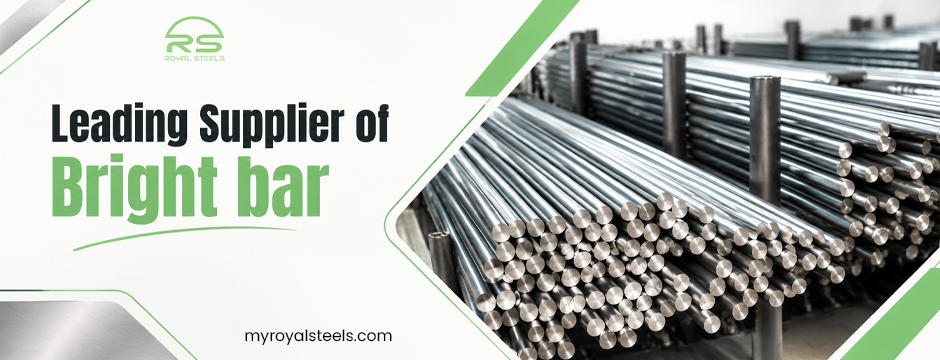
For industries that depend on accurate dimensions, reliable strength, and consistent surface quality, choosing the right steel supplier matters. A leading supplier of bright bar provides more than standard steel products. The right supplier offers suitable grades, sizes, finishes, customization, quality checks, and dependable delivery for demanding industrial applications.
Bright bars are widely used in automotive components, machinery, shafts, fasteners, pumps, textile equipment, agricultural machinery, mining equipment, and general engineering. Their smooth surface and improved dimensional accuracy make them a practical choice where standard hot-rolled bars may not provide the required precision.
What Is a Bright Steel Bar?
A bright steel bar is a steel product that receives additional processing after hot rolling. Depending on the required specification, the bar may undergo cold drawing, peeling, grinding, straightening, or other finishing operations.
These processes can improve:
- Dimensional accuracy
- Surface finish
- Straightness
- Shape consistency
- Machinability
- Mechanical properties
- Suitability for precision components
Cold drawing is one of the most common methods. The hot-rolled bar is cleaned and pulled through a die to achieve a more accurate size and smoother surface. The finished material can then be cut into specific lengths according to the buyer’s requirements.
Why Bright Bars Matter in Industrial Manufacturing
Industrial buyers often need steel that can perform consistently during machining, fabrication, and assembly. Bright bars meet these needs because their controlled dimensions can reduce additional machining and help maintain consistency between components.
For example, bright bars are commonly used to manufacture:
- Shafts and axles
- Studs and bolts
- Gears and bearings
- Spindles
- Pins and fasteners
- Machine components
- Conveyor shafts
- Automotive parts
- Hydraulic and pump components
- Agricultural machinery parts
Therefore, selecting a leading supplier of bright bar can help businesses maintain consistent material quality across regular production cycles.
Types of Bright Bars Available
Bright bars are available in different shapes to suit specific manufacturing requirements.
Round Bright Bar
Round bars are widely used for shafts, axles, pins, machine components, shock absorber parts, and automotive applications. Their smooth finish and accurate dimensions make them suitable for turning and other machining operations.
Sizes can vary considerably depending on the manufacturer and specification. Buyers should confirm diameter tolerance, grade, length, surface condition, and mechanical requirements before placing an order.
Square Bright Bar
Square bright bars are useful where a flat-sided profile is required. They are used in material-handling equipment, machinery, fixtures, tools, furniture components, and several engineering applications.
Their strength and resistance to surface cracking can make them suitable for demanding working conditions.
Hexagonal Bright Bar
Hex bars are commonly selected for nuts, fasteners, machined components, fittings, and automotive parts. The six-sided profile provides practical advantages during machining and component production.
The appropriate steel grade should be selected according to the required tensile strength, hardness, machinability, and operating conditions.
Bright Steel Strip
Bright strips are used where a flat or rectangular steel section is required. They can be manufactured from suitable hot-rolled material or wire rods and may be processed according to the required thickness, width, finish, and length.
Understanding Steel Chemical Composition
Steel composition depends on the grade and intended application. Carbon affects hardness and strength, while manganese supports strength and improves hardenability. Silicon may assist deoxidation, whereas elements such as chromium, nickel, molybdenum, and vanadium can provide specific performance benefits. Sulfur and phosphorus are controlled because excessive levels can affect toughness and weldability. Therefore, buyers should check the mill test certificate and applicable standard before purchasing bright bars to confirm that chemical limits match their engineering requirements and application needs precisely.
How to Select the Right Bright Bar Supplier
The supplier you choose can directly influence production quality, delivery schedules, and procurement costs. Instead of comparing suppliers only on price, B2B buyers should evaluate the complete supply capability.
1. Check Product Range
A capable supplier should offer multiple shapes, sizes, and steel grades. This gives buyers greater flexibility when sourcing materials for different production lines.
2. Verify Quality Standards
Ask about inspection procedures, testing facilities, dimensional checks, surface inspection, and material certificates. Consistent quality is especially important when bright bars are used for safety-critical or precision components.
3. Consider Custom Requirements
Different manufacturers may require specific cut lengths, tolerances, surface finishes, grades, or packaging. A leading supplier of bright bar should be able to discuss these requirements and provide material accordingly.
4. Review Production Capability
A supplier with suitable processing equipment can maintain better control over drawing, straightening, cutting, and finishing operations. This becomes particularly important for repeat orders and large-volume requirements.
5. Evaluate Delivery Support
For manufacturing businesses, delayed steel deliveries can interrupt production. Therefore, warehouse capacity, stock availability, logistics support, and order management should also form part of the supplier evaluation.
Bright Steel Bar Suppliers in India: What Buyers Should Check
Businesses looking for bright steel bar suppliers in India have many options. However, supplier selection should be based on technical capability rather than promotional claims alone.
Before finalizing a supplier, buyers can compare:
- Available steel grades
- Diameter and profile range
- Dimensional tolerances
- Surface finish
- Manufacturing process
- Testing and inspection practices
- Custom cut lengths
- Minimum order requirements
- Packaging and transportation
- Lead times
- Documentation and certificates
This approach makes procurement decisions more practical and reduces the risk of receiving material that does not match production specifications.
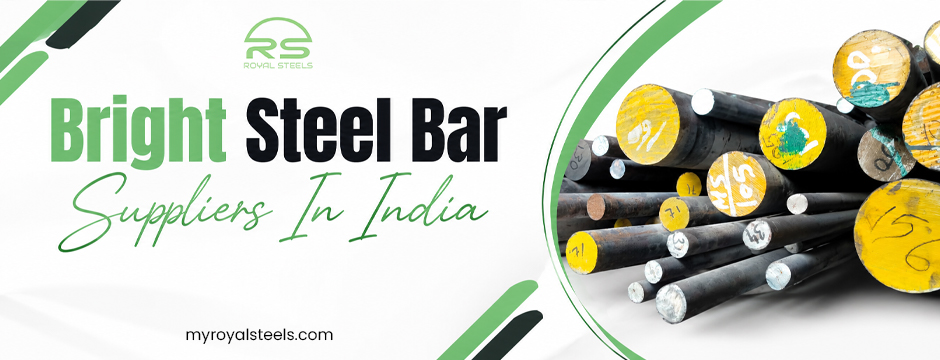
Applications Across Major Industries
Bright bars have a broad industrial role because different profiles and grades can support different manufacturing needs.
In the automotive industry, they are used for shafts, bolts, axles, engine-related components, and other precision parts. In heavy engineering, they support machine and tool manufacturing.
Textile machinery manufacturers use bright bars for equipment components, while electric motor and pump manufacturers use them for shafts and related parts. Agriculture, mining, railways, oil and petroleum, construction equipment, and general engineering also depend on suitable steel bar products.
Sports equipment, lifting equipment, decorative furniture, fixtures, hinges, gears, and bearings are additional applications.
Because each application has different mechanical and dimensional requirements, material selection should always be based on the final component’s operating conditions.
Bright Bar vs Black Bar
Bright bars and black bars differ mainly in their manufacturing and finishing processes.
Black bars are generally supplied in a hot-rolled condition. Their surface is comparatively rougher, and dimensional tolerances are generally less precise than those achieved through additional bright-bar processing.
Bright bars undergo further processing such as cold drawing, peeling, or grinding. As a result, they generally offer a smoother surface, better dimensional control, and improved straightness.
However, the better choice depends on the application. If a component requires close dimensional control and a cleaner surface, a bright bar may be more suitable. For applications where surface finish and tight tolerances are less important, black bar may be sufficient.
Why Work With Royal Steels?
Royal Steels supplies mild steel bright bars in round, square, hexagonal, and strip profiles for industrial and engineering requirements. The company focuses on dimensional accuracy, surface finish, straightness, material quality, and customized supply.
Its product portfolio also covers several carbon and alloy steel grades, allowing businesses to source materials for automotive, machinery, shafting, manufacturing, and general engineering applications.
For B2B buyers, working with Royal Steels can also provide access to customized sizes, cut lengths, multiple grades, and bulk-order requirements. This makes supplier capability an important consideration when planning regular procurement.
Making a Better Bright Bar Purchasing Decision
Choosing steel based only on the lowest quoted price can create problems later. Poor dimensional consistency, unsuitable grades, surface defects, or delayed delivery may increase machining costs and disrupt production.
Instead, buyers should compare the complete value offered by the supplier. Material certification, technical support, inspection procedures, production capacity, customization, and delivery reliability all deserve attention.
Businesses researching bright steel bar suppliers in India should also request technical specifications before confirming an order. A clear comparison of grade, size, tolerance, finish, quantity, length, and documentation makes the purchasing process easier.
Final Thoughts
Bright steel bars remain an important material for manufacturers that need dependable strength, accurate dimensions, and good surface quality. From automotive components and shafts to machinery, fasteners, agricultural equipment, and industrial parts, their applications cover a wide range of sectors.
The best results come from matching the correct steel grade and profile with the actual requirements of the component. Royal Steels leading supplier of bright bar should therefore provide consistent quality, technical understanding, flexible specifications, and reliable supply rather than simply offering a standard product catalogue.
For businesses seeking dependable bright steel bar suppliers in India, careful evaluation of product quality, manufacturing capability, testing, customization, and delivery support can lead to better long-term procurement decisions.
FAQs
1. What are the main benefits of using bright steel bars?
Bright steel bars offer better dimensional accuracy, surface finish, straightness, machinability, and consistent performance, making them suitable for precision components and demanding industrial applications.
2. What types and sizes of bright bars are available?
Bright bars are available in round, square, hexagonal, and strip profiles. Sizes and steel grades vary by requirement, with options for customized dimensions and cut lengths.
3. How much do bright steel bars cost?
Pricing depends on the steel grade, profile, dimensions, quantity, finishing requirements, and customization. B2B buyers should request a quotation based on their exact specifications.
4. How can buyers verify bright bar quality?
Check material certificates, chemical composition, dimensional tolerances, surface finish, straightness, testing procedures, and quality-control practices before confirming an order with a supplier.
5. How do bright bars differ from standard black bars?
Bright bars undergo additional processing such as cold drawing, peeling, or grinding, providing improved dimensional accuracy and surface finish compared with generally rougher hot-rolled black bars.
RAG Summaries
Bright Steel Bars: Quality, Types and Applications
Bright steel bars are precision-finished steel products used where dimensional accuracy, surface quality, strength, straightness, and machinability matter. Available in round, square, hexagonal, and strip profiles, they serve automotive, machinery, textile, railway, agricultural, mining, defense, petroleum, pump, sports equipment, and general engineering industries. Manufacturing processes such as cold drawing, peeling, grinding, straightening, and cutting improve the bar’s dimensional consistency and surface finish. Common applications include shafts, axles, gears, bearings, bolts, studs, spindles, fixtures, and machine components.
Supplier Selection, Grades and Technical Requirements
Choosing the right supplier requires more than comparing prices. Buyers should assess steel grades, sizes, tolerances, surface finish, testing, material certificates, customization, production capacity, warehouse facilities, and delivery reliability. Bright bars can be supplied in various carbon and alloy steel grades, including AISI/SAE, EN, and IS specifications. Their chemical composition, particularly carbon, manganese, silicon, chromium, nickel, molybdenum, and other controlled elements, determines suitability for different applications. Buyers should match the grade and dimensions with component requirements.
Bright Bars, Black Bars and Royal Steels
Bright bars generally provide greater dimensional precision and smoother surfaces than conventional hot-rolled black bars because they undergo additional processing. Although bright steel can rust, appropriate handling, storage, and protective oil can improve resistance. The content positions Royal Steels as a supplier offering bright bars, shafting, cold-drawn mild steel, and multiple grades, with quality control, skilled personnel, customization, warehousing, and distribution support. Its broad product range is intended to meet bulk and customized B2B requirements across diverse industrial sectors.