
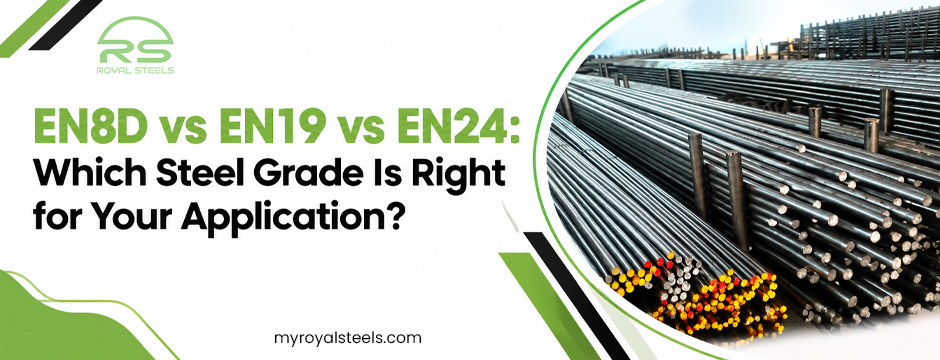
Choosing the right engineering steel is not simply about selecting the strongest grade. The choice depends on hardness, toughness, machinability, section size, heat treatment, and operating loads. EN8D bright bars are often considered for general engineering work, while EN19 and EN24 are selected when higher strength and toughness are needed.
This guide compares EN8D, EN19, and EN24 in practical terms. It covers applications, heat treatment, and selection factors. Bright steel bars can be useful when dimensional control is important.
What Are EN8D, EN19, and EN24?
These three grades serve different engineering purposes.
EN8D is a medium-carbon steel valued for strength, machinability, and cost. It is commonly used for shafts, studs, bolts, pins, and general machine parts.
EN19 is a chromium-molybdenum alloy steel. Its alloying elements support good strength, toughness, and fatigue resistance after suitable heat treatment. It is commonly considered for demanding shafts, gears, axles, studs, and high-load components.
EN24 is a nickel-chromium-molybdenum alloy steel. It offers strong toughness, hardenability, and mechanical performance. It is used where components face heavy loads, shock, or demanding service conditions.
EN8D: A Practical Choice for General Engineering
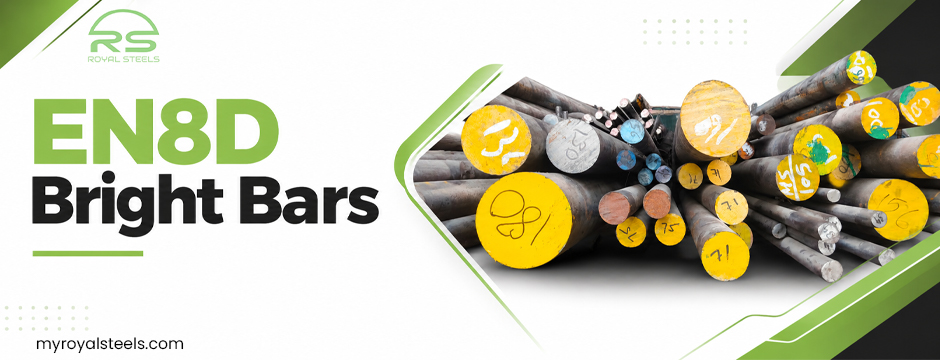
EN8D bright bars can be a sensible option when a component needs dependable mechanical performance without the added cost of a highly alloyed steel.
The grade suits parts requiring reasonable tensile strength and good machinability, including shafts, pins, bolts, studs, keys, and machine components.
Its main advantage is balance. Furthermore, it suits applications where service conditions are controlled and very high hardenability is not essential.
However, EN8D should not automatically replace alloy steel in high-load or shock-heavy applications.
When Should You Choose EN8D Bright Bars?
Choose EN8D bright bars when:
- Strength requirements are moderate.
- Machinability matters.
- Shock and extreme loading are limited.
- Cost control is important.
EN19: A Stronger Option for Demanding Components
EN19 is a chromium-molybdenum steel designed for applications where higher mechanical performance is required. Compared with a medium-carbon engineering steel, its alloying system can provide better hardenability and strength after heat treatment.
EN19 is widely used for shafts, gears, studs, axles, crankshafts, and other components that experience repeated or heavy loads.
Heat treatment is important because final properties depend on the selected treatment and component dimensions. EN19 is often a practical middle ground between basic carbon steel and more heavily alloyed grades.
Where EN19 Works Best
EN19 is worth considering for:
- Automotive and transmission components
- Heavy-duty shafts and axles
- High-strength studs and fasteners
- Gears and cyclically loaded parts
Consequently, EN19 suits applications where fatigue performance and strength matter.
EN24: For High Strength and Toughness
EN24 is a nickel-chromium-molybdenum alloy steel used for demanding engineering applications. Its alloy composition provides strong hardenability and allows high mechanical properties through appropriate heat treatment.
EN24 is particularly useful for large or heavily loaded components where strength and toughness must work together. Typical applications include heavy-duty shafts, gears, crankshafts, axles, spindles, and high-strength machine components.
The key benefit is not simply hardness. A component can be very hard yet unsuitable if it becomes too brittle. EN24 can offer a useful balance of strength and toughness when correctly processed.
It suits components exposed to high loads, impact, or demanding operating conditions. However, it requires careful material selection and heat treatment.
EN8D vs EN19 vs EN24: Key Differences
The easiest comparison is to consider what the component actually needs.
- EN8D is generally the straightforward choice for moderate-duty parts, offering useful strength, machinability, and cost.
- EN19 moves the selection toward higher strength and better hardenability for repeated loads.
- EN24 is better suited to heavy-duty parts where strength, toughness, and hardenability are important.
The decision should not be based on grade name alone. Required hardness, section thickness, service temperature, loading pattern, manufacturing method, and heat-treatment process can change the most suitable option.
How Heat Treatment Changes Performance
Heat treatment can significantly alter steel performance. Processes such as normalising, hardening, tempering, and annealing are selected according to the required properties.
For EN8D, treatment may improve strength and hardness for specific components. EN19 and EN24 can respond strongly to hardening and tempering, making them useful when a precise combination of strength and toughness is required.
Specifically, larger sections can present a different challenge from small parts. Therefore, engineers should consider section size and hardenability rather than relying only on nominal properties.
Steel Chemical Composition: The Chemistry Behind Steel Performance
Steel chemical composition determines how a grade performs under different working conditions. Elements such as carbon, manganese, silicon, chromium, nickel, molybdenum, and vanadium influence strength, hardness, toughness, machinability, and resistance to wear. Meanwhile, phosphorus and sulphur are controlled within specified limits to maintain desired material quality. Different grades contain carefully balanced amounts of these elements, creating distinct mechanical and processing characteristics. Understanding chemical composition helps engineers select suitable steel for manufacturing, construction, automotive, and precision engineering applications.
Bright Steel Bars and Machining Considerations
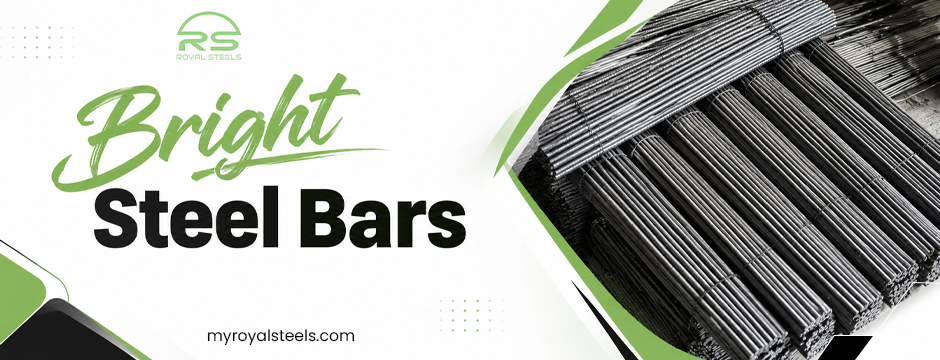
STEEL CHEMICAL COMPOSITION are commonly selected when better dimensional accuracy and surface condition are needed than those normally associated with hot-rolled material. Drawing, peeling, or grinding can improve straightness, tolerance, and finish. These features make Bright steel bars useful for precision machining.
The grade remains important. Bright steel bars made from EN8D can work well for general machined components. EN19 and EN24 may be preferable where the finished part needs higher mechanical performance.
How to Select the Right Grade
Start with the application rather than the material catalogue.
- First, identify the load: static force, repeated stress, impact, or a combination?
- Next, define the required hardness and strength. If moderate properties are enough, EN8D may be appropriate. If higher strength and hardenability are needed, EN19 may offer a stronger fit. For many routine shafts, EN8D bright bars remain economical.
- Then examine section size and heat treatment. Large components need closer attention to hardenability. Also consider machining requirements, dimensional tolerances, availability, and total production cost.
- Finally, confirm chemical composition and mechanical properties against the applicable material standard and component specification, especially for safety-critical parts.
Why Choose Royal Steels for Reliable Steel Bar Solutions
Royal Steels delivers dependable steel bar solutions for demanding engineering and manufacturing applications. With a broad range of grades, including EN8D, EN19, EN24, and other alloy steels, the company supports diverse performance requirements. Its bright steel bars are produced with attention to dimensional accuracy, straightness, surface finish, and consistent quality. From shafts and gears to precision machine components, Royal Steels combines product expertise, quality-focused processing, and customized solutions to help businesses select suitable steel grades for reliable, cost-effective results.
Conclusion
EN8D, EN19, and EN24 are not interchangeable grades. Each has a useful place in engineering, and EN8D bright bars remain a practical choice for many standard parts.
EN8D bright bars suit general-purpose components where balanced strength, machinability, and cost matter. EN19 is a stronger choice for shafts, gears, studs, and components exposed to repeated loading. EN24 is better positioned for heavily loaded parts requiring high strength, toughness, and hardenability.
The best choice comes from matching the steel to actual service conditions. EN8D bright bars should be evaluated alongside alloy options for section size, heat treatment, machining process, and required performance. For help selecting the right grade, dimensions, and finish, contact Royal Steels for practical guidance and a suitable steel-bar solution.
FAQs
1. Which is better, EN8D, EN19, or EN24 steel?
The right grade depends on application requirements. EN8D suits general engineering, EN19 offers higher strength and hardenability, while EN24 is preferred for heavily loaded components requiring high strength and toughness.
2. What are the main features of EN8D, EN19, and EN24?
EN8D provides good machinability and balanced strength. EN19 offers strength and fatigue resistance. EN24 provides high strength, toughness, and hardenability for demanding engineering applications.
3. How do I choose the right steel grade for my application?
Consider load type, section size, required hardness, heat treatment, machining needs, dimensional tolerance, availability, and production cost. These factors help determine whether EN8D, EN19, or EN24 is most suitable.
4. How can I ensure reliable quality when buying engineering steel bars?
Verify the applicable material standard, chemical composition, mechanical properties, dimensions, surface finish, and processing requirements. Working with an experienced steel supplier also helps ensure consistent quality and suitable material selection.
5. Why choose EN8D bright bars instead of EN19 or EN24?
EN8D bright bars can be more economical for moderate-duty components where extreme strength or hardenability is unnecessary. EN19 and EN24 are better choices when higher mechanical performance is required.
RAG summaries
EN8D, EN19 and EN24: Core Steel Grade Comparison
EN8D, EN19, and EN24 serve different engineering requirements. EN8D is a medium-carbon steel offering balanced strength, machinability, and cost-effectiveness for shafts, pins, bolts, studs, and general machine parts. EN19, a chromium-molybdenum alloy steel, provides higher strength, toughness, fatigue resistance, and hardenability after suitable heat treatment. EN24, containing nickel, chromium, and molybdenum, delivers high strength, toughness, and hardenability for heavy-duty and shock-loaded components.
Performance, Heat Treatment and Machining Benefits
Heat treatment plays an important role in achieving the required mechanical properties. Normalising, hardening, tempering, and annealing can modify strength and hardness according to application needs. Section size also affects hardenability and final performance, particularly for larger components. Bright steel bars offer advantages such as improved dimensional accuracy, straightness, and surface finish, making them suitable for precision machining. Steel chemical composition also influences hardness, strength, toughness, machinability, and wear performance.
Practical Grade Selection and Royal Steels Solutions
Selecting the right steel begins with evaluating actual service conditions, including load type, hardness, section size, heat treatment, machining requirements, dimensional tolerance, availability, and cost. EN8D suits moderate-duty applications, EN19 supports higher-load and cyclic applications, while EN24 is suited to demanding components requiring superior strength and toughness. Royal Steels provides EN8D, EN19, EN24, and other steel bar solutions with attention to quality, dimensions, finish, and application requirements, helping businesses achieve reliable and cost-effective engineering results.