
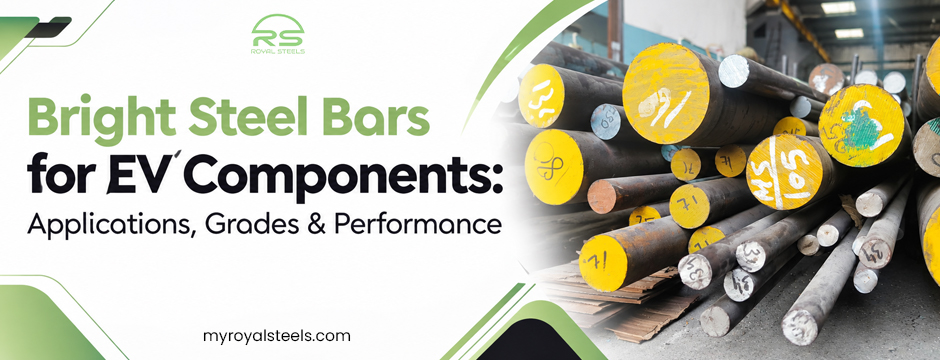
Bright steel bars for EV components are increasingly relevant as electric vehicles demand parts that combine dimensional accuracy, strength, surface quality, and dependable machining. Unlike a generic steel rod, a bright bar receives additional processing that improves its size, straightness, and finish. For manufacturers comparing bright steel bar suppliers, understanding the material, grade, and intended component is essential.
Why Bright Steel Bars Suit EV Manufacturing
EV powertrains use high rotational speeds and compact assemblies. Dimensional errors can affect fit, balance, wear, and assembly.
Bright bars are generally produced from mild or carbon steel through operations such as cold drawing, peeling, or grinding. Cold drawing pulls the prepared bar through a die to reduce its section and improve dimensional control. It can also increase yield and tensile strength through work hardening.
A smoother finish can reduce machining work for parts with tight specifications. However, bright steel is not corrosion-proof; oiling, coating, or suitable storage may still be necessary.
For buyers, material selection should follow the component, not simply the purchase price. Experienced bright steel bar suppliers can help align grade, tolerance, finish, straightness, size, and cut length.
Key EV Applications
Motor and Rotor Shafts
Motor shafts must rotate smoothly while transmitting torque. Concentricity, straightness, surface condition, and mechanical strength therefore matter.
Bright bar stock can be machined into shafts, axles, spindles, and related rotating parts. Consistent dimensions help reduce corrective machining and support accurate bearing fits. These characteristics are particularly relevant to electric motor components, where straightness and dimensional control can influence vibration, noise, and high-speed operation.
Gears, Pins and Powertrain Parts
EV transmissions and reduction gear systems contain precision parts that experience repeated loads. Bright steel can be used as feedstock for gears, pins, studs, shafts, and other machined components.
The appropriate grade depends on the final part and its loading conditions. A higher-strength alloy is not automatically necessary for every application. Engineers should consider hardness, toughness, fatigue, machinability, heat treatment, and operating environment.
Recent industry research also identifies automotive powertrain and transmission components as an important application area for precision bright steel products.
Fasteners and Connectors
Bolts, studs, threaded components, and specialist connectors require reliable mechanical properties and consistent dimensions. Round and hexagonal bright bars provide practical starting stock.
Hex bars are especially useful when a component requires efficient turning or a profile that supports gripping during machining.
Grades: What Should EV Buyers Consider?
There is no single steel grade that suits every EV component. Selection depends on the component’s geometry, load, manufacturing route, and required performance.
Mild and Low-Carbon Steels
Low-carbon grades are widely valued for machinability, ductility, and weldability. They can suit less highly stressed brackets, shafts, pins, and general engineering components where extreme hardness is unnecessary.
Medium-Carbon and Alloy Steels
Where components face higher loads, fatigue, wear, or demanding heat-treatment requirements, medium-carbon and alloy grades may be considered. Common engineering grades include En8D, En19, En24, 16MnCr5, 20MnCr5, SAE 4140, SAE 8620, and SAE 52100. Their suitability depends on the finished component and specification.
16MnCr5 and 20MnCr5 are associated with case-hardening applications, while SAE 52100 is widely used for bearing-related applications. Grade selection should follow engineering requirements, not availability alone.
Before ordering, ask bright steel bar suppliers for the material standard, composition, mechanical properties, heat-treatment condition, and inspection documents relevant to the job.
Chemical composition PDF
The chemical composition PDF provides a useful reference for selecting steel grades used in precision applications, including EV components. It lists composition ranges for carbon, manganese, silicon, and alloying elements across grades such as EN, SAE, and other engineering steels. These details help manufacturers match material chemistry with requirements for strength, machinability, wear resistance, and heat treatment. For motor shafts, pins, gears, and fasteners, checking the specified grade and composition can support consistent performance, reliable component manufacturing, and durability.
Performance Factors That Matter
Dimensional Tolerance
Precision components need predictable dimensions. Bright bars can be produced to close tolerances, with specifications such as h9 or h10 used for certain applications. State the required tolerance on the purchase specification.
Surface Finish
A smooth surface can reduce the amount of finishing work needed before machining or assembly. It can also support consistent contact where the component design requires a controlled surface.
Straightness and Concentricity
Straight, consistent bars are easier to machine accurately. This matters especially for long shafts and rotating parts, where imbalance or misalignment can cause problems.
Strength and Fatigue Behaviour
Cold working can raise yield and tensile strength through work hardening. Yet strength alone does not determine service performance. Consider hardness, toughness, fatigue, machinability, heat treatment, and operating environment.
How to Choose Bright Steel Bar Suppliers
A supplier evaluation should start with technical capability, not marketing language.
Check whether bright steel bar suppliers can provide the required diameter, profile, tolerance, grade, surface condition, straightness, and cut length. Ask for test certificates when traceability matters.
Production capability matters too. An automotive or EV supplier should have controlled processing, inspection procedures, trained quality personnel, and reliable raw-material sourcing.
Next, review whether bright steel bar suppliers can support different profiles. Round, square, hexagonal, and strip bars may be needed across a product family. Custom sizes or cut lengths can also reduce material waste and secondary operations.
Documentation also matters. Clear grade identification, dimensional inspection, and batch traceability simplify incoming inspection and help prevent mix-ups.
Finally, compare total manufacturing value, not only the quoted rate. Consistent stock can reduce rejects, machining adjustments, and production interruptions, which may outweigh a small price difference.
Bright Steel Bars vs Black Bars for EV Parts
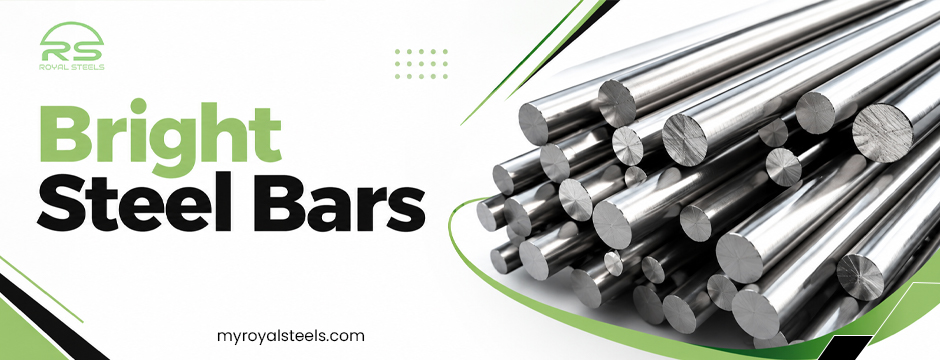
Black bars are generally hot rolled and retain a rougher surface with wider dimensional variation than precision-finished bright bars. Bright bars receive additional processing to improve surface condition, dimensional accuracy, and straightness.
That does not make bright steel the universal choice. Larger structural parts may not need close tolerances or a refined surface. Precision shafts, pins, fasteners, and machined components are more likely to benefit from the characteristics of bright bar stock.
Practical Buying Checklist
Before placing an order for EV component stock, confirm:
- Steel grade and applicable standard
- Diameter or profile
- Required dimensional tolerance
- Surface-finish requirement
- Straightness specification
- Mechanical properties
- Heat-treatment condition, if applicable
- Cut length and quantity
- Inspection and test certificates
- Packaging and corrosion protection
This checklist gives purchasing and engineering teams a shared specification and reduces ambiguity. Good bright steel bar suppliers should be able to confirm these details before production.
Reliable Bright Steel Bars from Royal Steels
Royal Steels supports manufacturers seeking dependable bright steel bar suppliers for precision-driven applications. With expertise in cold-drawn mild steel, bright mild steel, JIS-7, steel shafting, and bright bars, the team focuses on consistent dimensions, surface quality, straightness, and machinability. Its range of round and other bright-bar profiles can support EV shafts, pins, fasteners, and machined components. For specification-led sourcing, Royal Steels combines technical knowledge with quality-focused processing and reliable material solutions.
Final Takeaway
Bright steel bars for EV components can support precision manufacturing across motor shafts, transmission parts, pins, gears, fasteners, and other machined components. Their value comes from a combination of dimensional control, surface quality, straightness, machinability, and mechanical performance.
The suitable grade depends on the finished part and service conditions. Consequently, buyers should match the steel specification to engineering requirements, machining processes, and quality documentation.
When comparing bright steel bar suppliers, look beyond availability and price. Technical consistency, traceability, customisation, inspection, and delivery capability can have a direct effect on production efficiency.
For manufacturers seeking dependable material and precision-focused steel solutions, Royal Steels offers multiple bright-bar profiles and grades. Contact the team to discuss your EV component specifications and material options.
Frequently Asked Questions
1. What are the benefits of bright steel bars for EV components?
Bright steel bars offer dimensional accuracy, improved surface finish, straightness, and reliable machinability, making them suitable for EV motor shafts, pins, gears, fasteners, and other precision-machined components.
2. What grades of bright steel bars are used for EV components?
Common grades include En8D, En19, En24, 16MnCr5, 20MnCr5, SAE 4140, SAE 8620, and SAE 52100. The right grade depends on component design, loading, hardness, fatigue, machining, and heat-treatment requirements.
3. How do I choose the right bright steel bar supplier?
Compare suppliers based on grade availability, dimensional tolerances, surface finish, straightness, profiles, cut lengths, inspection procedures, material certificates, traceability, and delivery reliability—not price alone.
4. Are bright steel bars corrosion-resistant for EV applications?
Bright steel bars are not inherently corrosion-proof. Appropriate oiling, coating, packaging, and storage can help protect the material, particularly during transportation, inventory, and manufacturing.
5. What makes Royal Steels different from other bright steel bar suppliers?
Royal Steels combines expertise in cold-drawn mild steel, bright mild steel, JIS-7, steel shafting, and bright bars with specification-focused processing, supporting manufacturers seeking consistent material for precision applications.
RAGs
Precision Steel for EV Manufacturing
Bright steel bars are increasingly valuable in EV manufacturing because they combine dimensional accuracy, surface quality, straightness, machinability, and mechanical performance. Their applications include motor and rotor shafts, axles, spindles, gears, pins, studs, fasteners, connectors, and other precision-machined powertrain components. Cold drawing, peeling, and grinding can improve dimensional control and surface condition. However, bright steel is not automatically suitable for every EV part; material selection must reflect component geometry, loading, manufacturing processes, and operating conditions.
Grades, Chemistry and Performance
EV component manufacturers can select from mild, low-carbon, medium-carbon, and alloy steel grades according to required performance. Common engineering grades include En8D, En19, En24, 16MnCr5, 20MnCr5, SAE 4140, SAE 8620, and SAE 52100. Factors such as strength, hardness, toughness, fatigue behaviour, machinability, weldability, wear resistance, and heat treatment influence grade selection. Chemical composition data helps verify alloying elements and material suitability. Dimensional tolerance, surface finish, straightness, and concentricity are equally important for precision components.
Smarter Supplier Selection
Choosing dependable bright steel bar suppliers requires more than comparing quoted prices. Buyers should verify diameter, profile, grade, tolerance, surface condition, straightness, cut length, mechanical properties, heat-treatment condition, inspection certificates, packaging, and batch traceability. Round, square, hexagonal, and strip profiles may support varied component requirements, while custom sizes can reduce waste and secondary machining. Royal Steels offers bright-bar profiles and grades with technical expertise focused on consistent dimensions, surface quality, machinability, and specification-led steel solutions for demanding manufacturing applications.