
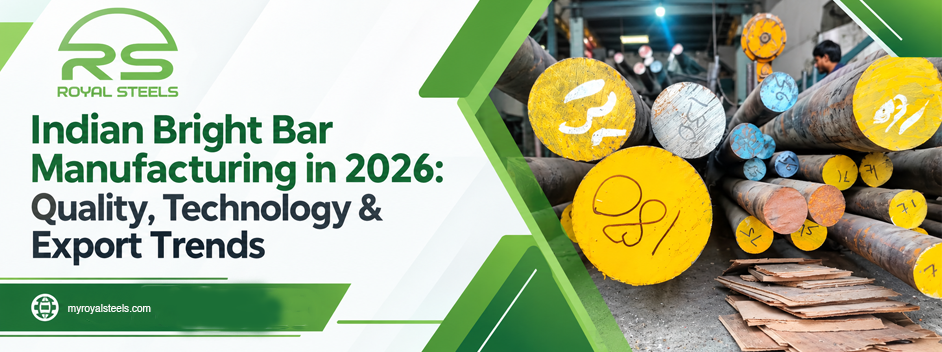
India’s bright bar industry is moving toward tighter tolerances, better surface quality, efficient production, and export readiness. Choosing reliable bright steel bar suppliers now involves more than comparing price per kilogram. Grade, dimensional accuracy, machinability, inspection, traceability, and delivery can affect the final component.
Bright bars are cold-worked steel products valued for their improved surface finish and dimensional consistency. They are used in shafts, fasteners, gears, bearings, machine parts, pumps, and motors. Consequently, process control and dependable raw materials matter in demanding markets.
What makes bright steel bar suppliers worth comparing?
Bright bars are generally produced from hot-rolled steel through cold drawing, peeling, grinding, or related finishing operations. The process improves appearance and dimensional control and can enhance certain mechanical properties through cold work.
However, a bright surface does not automatically mean corrosion-proof steel. Ordinary bright mild steel can rust when exposed to moisture and oxygen. Proper storage, handling, protective oil, and suitable surface treatment can reduce the risk.
The key question is whether the product meets the required grade, tolerance, straightness, surface condition, and mechanical properties.
How Indian bright bar manufacturers are improving quality
Modern buyers expect repeatable quality across batches. This has made inspection and process discipline increasingly important for bright bar manufacturers in India.
Production begins with selected raw material. Depending on grade and end use, manufacturers may work with low-carbon mild steel, alloy steel, or other engineering grades. The material then passes through controlled forming and finishing.
Quality checks can cover diameter or section size, surface defects, straightness, hardness, tensile properties, and chemical composition. Certified raw-material sourcing also helps reduce variation before processing begins.
Round, square and hexagonal profiles
Round bright bars suit applications requiring accurate dimensions and good machinability. Uses include shafts, axles, bolts, studs, gears, and precision machine parts.
Square bright bars suit material-handling equipment where crack resistance and fatigue life matter.
Hexagonal bright bars suit components machined from multiple faces, including automotive parts, machinery components, springs, and hardware.
Strip bright bars combine strength, ductility, and machinability for fabricated and galvanised products.
Steel chemical composition
The steel chemical composition must match the intended application and applicable specification. Carbon is a major factor because it influences hardness, strength, weldability, and machinability. Manganese can contribute to strength and hardenability, while silicon is commonly used as a deoxidising element.
Alloy grades may contain chromium, nickel, molybdenum, or vanadium, depending on the required performance.
A material test certificate verifies the chemical analysis of a supplied heat or batch. This is more reliable than judging material by appearance. When components face repeated loads, wear, or precision machining, composition and mechanical properties should be checked against the drawing and relevant standard.
Technology shaping Indian production in 2026
Technology is increasingly focused on consistency rather than simply higher output. Controlled cold-drawing equipment, precision tooling, improved straightening, and finishing systems can help manufacturers maintain tighter dimensional limits.
Inspection technology is also becoming more important. Digital systems can record dimensions and flag deviations before large quantities are processed.
Furthermore, organised warehouses help prevent handling damage and mix-ups between grades or sizes. Clear identification and inventory tracking are useful when customers order several specifications.
For buyers evaluating bright steel bar suppliers, these operational details can be as important as the headline product specification.
Key Factors Buyers Should Review Before Ordering
Use a purchasing checklist to prevent costly problems.
First, confirm the grade. Ask for the exact designation and applicable standard.
Next, verify dimensions and tolerance. A nominal diameter is not enough when the component requires a controlled fit.
Then, check surface requirements. Roughness, peeling, grinding, and visible defects may matter depending on the application.
Also, review testing documents. Material certificates and inspection reports provide evidence of consistency.
Finally, discuss packaging and delivery. Long bars can be damaged by poor transit support.
This approach helps purchasing teams compare bright steel bar suppliers on measurable factors instead of relying only on quoted prices.
Where bright bars are used across Indian industry
Bright bars have a wide industrial footprint. Automotive manufacturers use them for fasteners, shafts, engine-related components, and other precision parts. Engineering companies use them for machine components, tools, gears, bearings, hinges, and conveyor shafts.
They are also found in textile machinery, electric motors, pumps, agricultural equipment, mining machinery, railway applications, fitness equipment, and selected oil and petroleum components.
Size varies by use. Smaller sections may suit fasteners, while larger round sections can serve heavy engineering and shafting. Therefore, the correct specification should always be selected from the component’s design requirements.
Export trends and global buyer expectations
India’s export opportunity in bright bars depends on consistent quality, documentation, competitive manufacturing, and dependable logistics. Overseas buyers often expect clear grade identification, dimensional compliance, traceability, packaging standards, and predictable lead times.
In 2026, export-oriented bright bar manufacturers in India and bright steel bar suppliers can strengthen their position by treating documentation as part of product quality. Test certificates, inspection records, packing details, and shipment information should be accurate and easy to verify.
Another trend is demand for repeatable supply. A successful trial shipment is useful, but long-term business depends on maintaining specifications across batches.
Consequently, bright steel bar suppliers that combine engineering knowledge with disciplined quality systems are better placed to serve international customers.
Choosing the right manufacturing partner
The best bright steel bar suppliers are not necessarily those offering the lowest initial quotation. Consider technical capability, product range, inspection systems, raw-material sourcing, warehouse practices, production capacity, and delivery performance.
For bright bar manufacturers in India, handling different grades and sizes can help buyers consolidate sourcing.
A strong bright steel bar supplier should be able to discuss the application, understand the standard, explain available grades, and provide quality documentation. That level of technical communication reduces uncertainty before production starts.
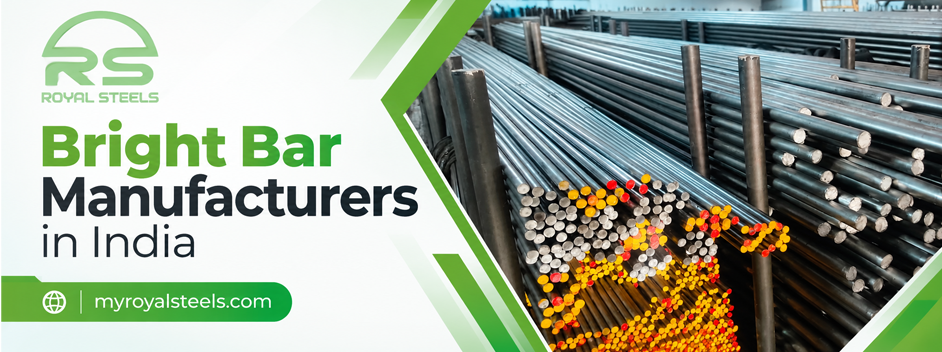
Precision-Driven Bright Steel Bar Manufacturing
Royal Steels brings experienced professionals, dedicated technicians, and quality controllers together to manufacture reliable bright steel bars. Its processes cover cold-drawn low-carbon mild steel, SBQ steel, JIS steel, and shafting steel, with raw materials sourced from certified vendors. A structured warehouse and distribution network supports organised inventory and timely deliveries nationwide. For businesses evaluating bright bar manufacturers in India, Royal Steels offers consistent quality, technical expertise, and dependable service tailored to diverse industrial requirements.
Conclusion
Indian bright bar manufacturing in 2026 is increasingly shaped by precision, process control, documentation, and export readiness. Buyers should evaluate bright steel bar suppliers through measurable quality factors, not appearance or price alone. The right material grade, controlled dimensions, surface finish, verified composition, and logistics can influence performance when comparing bright steel bar suppliers.
For businesses seeking dependable bright steel bars, Royal Steels offers precision-oriented products and related steel grades. Contact the team to discuss your size, grade, tolerance, and application requirements.
FAQs
1. Why should I choose a reliable bright steel bar supplier?
A reliable supplier provides consistent grades, accurate dimensions, controlled surface finish, verified chemical composition, quality documentation, and dependable delivery. This reduces production risks and helps ensure bright bars perform consistently in demanding industrial applications.
2. What features should I look for in bright steel bars?
Look for the required grade, dimensional tolerance, straightness, surface condition, mechanical properties, and profile. Round, square, hexagonal, and strip bright bars can be selected according to machining, automotive, engineering, and fabrication requirements.
3. How can I evaluate the cost of bright steel bars?
Compare suppliers based on more than the quoted price per kilogram. Consider grade, tolerance, testing, certification, packaging, minimum order requirements, delivery timelines, and overall consistency to determine the true purchasing value.
4. How can I verify the quality of bright steel bars?
Request a material test certificate and relevant inspection reports. Verify chemical composition, dimensions, hardness, tensile properties, and surface condition against the applicable standard and your component requirements before accepting the material.
5. What differentiates leading bright bar manufacturers in India?
Leading bright bar manufacturers combine precision cold-drawing and finishing capabilities with certified raw materials, inspection systems, traceability, organised warehousing, multiple steel grades, and reliable delivery. These capabilities can provide greater consistency than suppliers competing primarily on price.
RAGs
Precision Defines Modern Bright Bar Manufacturing
India’s bright bar industry in 2026 is increasingly focused on dimensional accuracy, surface quality, process control, traceability, and export readiness. Bright bars produced through cold drawing, peeling, grinding, and related processes serve automotive, engineering, machinery, pump, motor, fastener, and shafting applications. Buyers should assess grade, tolerance, straightness, surface condition, mechanical properties, chemical composition, testing documentation, packaging, and delivery reliability rather than relying solely on price or appearance.
Technology, Quality and Material Control
Modern bright bar manufacturers in India are adopting controlled production, precision tooling, improved straightening, finishing systems, digital inspection, and organised inventory practices to achieve consistent batch quality. Round, square, hexagonal, and strip profiles serve different industrial requirements. Steel chemical composition also plays a critical role in performance, with carbon, manganese, silicon, and alloying elements influencing strength, hardness, weldability, machinability, and hardenability. Material test certificates and inspection reports provide valuable evidence of specification compliance.
Export-Ready Supply With Dependable Quality
Global demand is encouraging Indian bright steel bar suppliers to strengthen documentation, traceability, packaging, logistics, and repeatable quality. Overseas buyers increasingly expect accurate certificates, dimensional compliance, reliable lead times, and consistent specifications across shipments. Royal Steels combines experienced professionals, technicians, quality controllers, certified raw-material sourcing, structured warehousing, and nationwide distribution to supply cold-drawn low-carbon mild steel, SBQ steel, JIS steel, and shafting steel. Its precision-oriented approach supports diverse industrial and sourcing requirements.