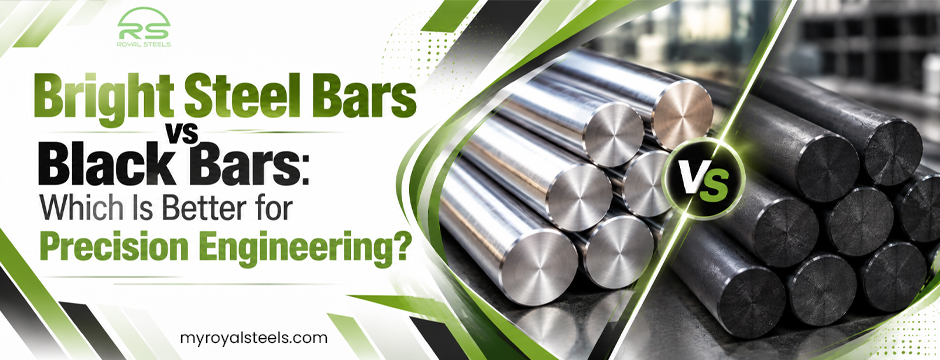
Choosing the right steel bar can directly affect the accuracy, performance, and cost of an engineered component. Bright steel bars and black bars are both widely used in manufacturing, but they differ in surface finish, dimensional tolerances, processing requirements, and suitability for specific applications. Understanding these differences helps engineers, manufacturers, and procurement teams make informed decisions.
Although both materials have important industrial uses, the better option depends on the component’s design, machining requirements, operating conditions, and budget. This guide compares their properties, explains their applications, and highlights the factors that matter most when selecting steel for precision engineering.
What Are Bright Steel Bars?
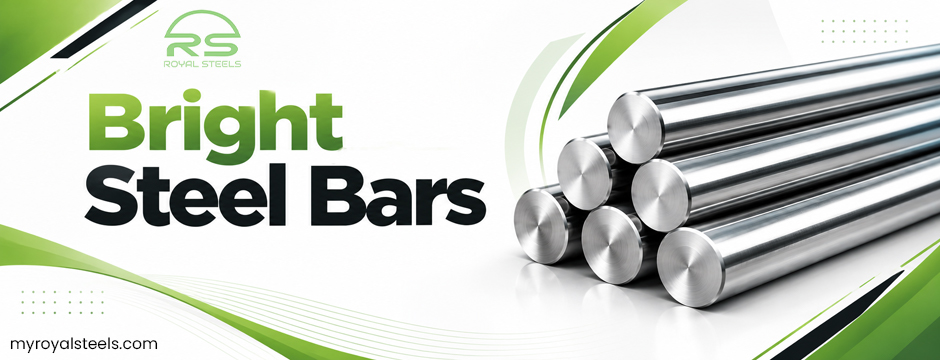
Bright steel bars are steel products processed beyond the initial hot-rolling stage to improve their surface quality and dimensional consistency. Common finishing methods include cold drawing, peeling, and grinding. The specific process depends on the required dimensions, grade, and surface condition.
These bars generally feature a smooth, silvery-grey finish and more consistent dimensions than standard hot-rolled products. Their improved straightness and tighter dimensional tolerances can reduce the amount of additional machining required.
Furthermore, they are available in several shapes, including round, square, hexagonal, and flat strips. This versatility makes them useful for manufacturing shafts, bolts, studs, spindles, axles, and machine components.
Key Advantages of Bright Bars
- Dimensional accuracy: Consistent dimensions help maintain component tolerances.
- Improved surface finish: A smoother surface can reduce finishing work.
- Machining efficiency: Reduced stock removal may shorten production time.
- Shape versatility: Different profiles support diverse engineering designs.
- Reliable fabrication: Suitable grades offer good machinability and weldability where required.
However, these advantages do not automatically make bright bars suitable for every application. Engineers must still consider the steel grade, mechanical properties, and manufacturing process.
What Are Black Steel Bars?
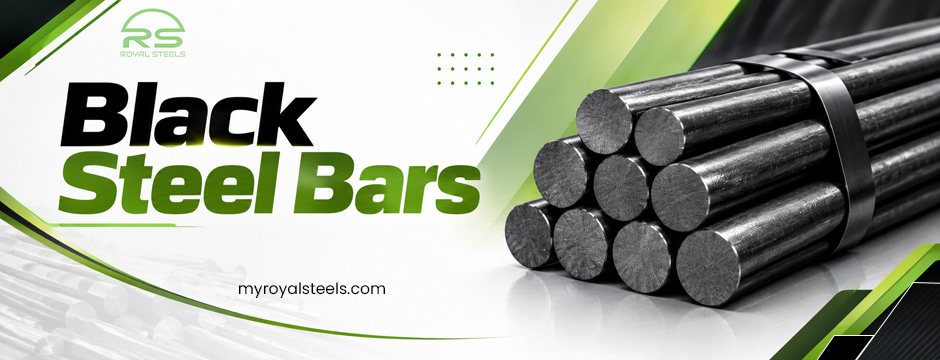
Black steel bars are generally hot-rolled steel products that retain the surface condition formed during high-temperature rolling. Their darker appearance comes from the oxide scale that develops during processing.
Unlike finished bright bars, black bars typically have a rougher surface and wider dimensional tolerances. Their dimensions and straightness may require additional machining when a component demands close accuracy.
Nevertheless, they remain a practical choice for structural work, fabrication, general engineering, and applications where a highly refined surface is unnecessary.
Common Applications of Black Bars
Black bars are frequently used for general-purpose metal fabrication, brackets, supports, structural components, and machine parts that undergo further machining. They can also serve as raw material for producing finished steel components.
Their suitability depends on the grade, size, and required mechanical properties. For example, a black round bar may be appropriate when substantial material removal is already part of the manufacturing process.
Consequently, selecting black bars can be economical when surface finish and tight tolerances are not essential at the initial production stage.
Bright Steel Bars vs Black Bars: Key Differences
Both materials can support demanding industrial applications, but their processing history affects how they perform during manufacturing.
| Comparison Factor | Bright Steel Bars | Black Steel Bars |
| Manufacturing process | Cold drawing, peeling, or grinding | Primarily hot rolling |
| Surface appearance | Smooth, silvery-grey | Dark, often covered with oxide scale |
| Dimensional accuracy | Generally higher | Generally lower |
| Surface consistency | More uniform | May vary with rolling conditions |
| Machining requirements | Often less finishing is needed | Additional machining may be necessary |
| Material cost | Often higher per unit | Often lower per unit |
| Typical applications | Shafts, spindles, precision components | Fabrication, structural parts, general engineering |
| Best selection criterion | Close tolerances and refined finish | Cost efficiency and less demanding tolerances |
These are general comparisons, not absolute rules. Actual performance depends on the steel grade, manufacturing method, supplier specifications, and applicable quality standards.
Why Dimensional Accuracy Matters in Precision Engineering
Precision engineering involves producing components that must fit, move, or operate within defined tolerances. Even a small dimensional variation can affect assembly, alignment, vibration, and service life.
For example, a shaft fitted into a bearing requires suitable diameter tolerances and surface characteristics. If the raw material needs substantial correction, machining time increases and more material may be wasted.
Bright steel bars can simplify this process by providing a more consistent starting dimension. However, their finished dimensions must still be checked against the engineering drawing. Cold drawing can also introduce residual stresses, which may cause distortion when material is removed asymmetrically.
For this reason, engineers should evaluate straightness, diameter tolerance, surface condition, and stress-relief requirements before approving a material for production.
Chemical Steel Composition
The chemical composition of steel determines many of its mechanical and manufacturing characteristics. Carbon influences hardness and strength, while alloying elements such as chromium, manganese, nickel, and molybdenum can improve properties such as hardenability, wear resistance, and toughness.
Both bright and black bars can be manufactured from mild steel, carbon steel, or alloy steel grades. Their names primarily indicate the processing and surface condition, not a fundamentally different chemical composition.
For instance, AISI/SAE 1018 is a low-carbon steel commonly associated with machining and general engineering. Grades such as EN31 and SAE 52100 are high-carbon chromium-bearing steels often selected for applications requiring suitable hardness and wear resistance after appropriate heat treatment.
Therefore, buyers should verify the specified grade and material test certificate rather than choosing steel based on appearance alone. Chemical composition, mechanical properties, and heat-treatment requirements must match the component’s intended service conditions.
Which Steel Bar Is Better for Different Applications?
The right material depends on what the component must achieve. Consider the following practical examples before making a purchasing decision.
Automotive and Machinery Components
Shafts, axles, threaded parts, and machine components often require consistent dimensions and dependable machining performance. Bright bars are frequently preferred when these requirements justify their additional processing cost.
However, the steel grade must also provide the necessary strength, fatigue resistance, and compatibility with the intended heat treatment.
Construction and General Fabrication
For supports, brackets, and fabricated parts with less demanding dimensional requirements, black bars can offer a cost-effective starting material. Their rougher surface may be acceptable when appearance and close tolerances are not critical.
Furthermore, welding suitability should be confirmed through the selected grade’s chemistry and relevant welding procedure. Not every steel grade responds identically to welding.
High-Wear and Heat-Treated Components
Applications involving repeated contact, friction, or substantial loads require careful material selection. Grades such as EN31 or SAE 52100 may suit certain bearing-related applications, subject to design and heat-treatment requirements.
In these cases, selecting the correct grade is more important than choosing between a bright or black finish. The finishing process does not, by itself, guarantee the required hardness or wear resistance.
How to Choose the Right Steel Bar
Before placing an order, assess the following factors:
- Required tolerances: Determine the acceptable dimensional variation from the engineering drawing.
- Surface finish: Establish whether the component needs a smooth finish or will undergo further machining.
- Steel grade: Match the chemical composition and mechanical properties to the operating environment.
- Manufacturing costs: Compare the purchase price with machining time, material waste, and finishing expenses.
- Component geometry: Consider the required round, square, hexagonal, or strip profile.
- Quality documentation: Request relevant material certificates and inspection records.
- Supply specifications: Confirm dimensions, straightness, cut lengths, availability, and delivery schedules.
A slightly more expensive raw material may reduce total production costs if it requires less machining. Conversely, paying for a refined finish may offer little value when the component will undergo extensive material removal.
Royal Steels: Your Trusted Partner for Precision Bright Steel Bars
Royal Steels delivers reliable bright steel bars backed by an experienced professional team, stringent quality control, and organized warehouse and distribution facilities. Its extensive product range includes cold-drawn mild steel, steel shafting, round and hexagonal bars, HB wire, and grades such as EN8D, EN19, EN24, EN31, and AISI/SAE 1018. With certified raw material sourcing, customized specifications, and a focus on dimensional accuracy and dependable delivery, Royal Steels supports diverse industrial and precision engineering requirements. Contact the team to discuss your steel needs.
Conclusion
The choice between bright and black bars ultimately depends on the component’s accuracy requirements, manufacturing process, and overall cost. Bright steel bars generally suit precision components that benefit from improved dimensional consistency and surface finish. Black bars are often more economical for general fabrication and applications that permit wider tolerances.
Neither option is universally superior. Engineers should evaluate material grade, tolerances, machining allowances, and service conditions together to achieve the best results.
If you need steel products for precision machining or general industrial applications, explore the available grades, sizes, and customized specifications with Royal Steels to identify a suitable solution for your manufacturing requirements.
Frequently Asked Questions
1. What are the main benefits of bright steel bars for precision engineering?
Bright steel bars offer improved dimensional accuracy, a smoother surface finish, and consistent dimensions. These qualities can reduce machining requirements and make them suitable for shafts, spindles, bolts, and precision machine components.
2. What sizes, shapes, and steel grades are available for bright steel bars?
Bright steel bars are available in round, square, hexagonal, and strip profiles. Common grades include AISI/SAE 1018, EN8D, EN19, EN24, and EN31, depending on supplier availability and specific requirements.
3. Are bright steel bars more expensive than black steel bars?
Bright steel bars generally cost more because of additional processing. However, they may reduce overall production costs by minimizing machining time, material waste, and finishing work. Compare total manufacturing costs before purchasing.
4. How can buyers verify the quality of bright steel bars?
Buyers should check material test certificates, chemical composition, dimensional tolerances, surface finish, and mechanical properties. Choosing suppliers with documented quality-control procedures and traceable raw materials helps ensure consistent product quality.
5. Why choose Royal Steels for bright steel bars?
Royal Steels offers multiple steel grades, customized specifications, quality-control procedures, and organized warehousing and distribution. Its range of bright bars and steel shafting supports diverse industrial requirements, including precision engineering and general manufacturing.
RAG summaries
Bright Steel Bars and Black Bars: Core Differences
Bright steel bars undergo additional processing, such as cold drawing, peeling, or grinding, to improve surface finish, straightness, and dimensional accuracy. In contrast, black steel bars are typically hot-rolled products with a darker surface and wider dimensional tolerances. Bright bars often suit precision components, including shafts, spindles, bolts, and machine parts, while black bars are practical for structural work, fabrication, and general engineering. The best choice depends on tolerances, machining needs, material grade, and total production costs.
Chemical Composition and Precision Engineering Applications
Steel composition influences strength, hardness, toughness, machinability, and wear resistance. Both bright and black bars can use mild steel, carbon steel, or alloy steel grades. AISI/SAE 1018 supports general engineering applications, while EN31 and SAE 52100 may suit selected wear-resistant components after appropriate heat treatment. Engineers should verify material certificates, chemical composition, mechanical properties, surface condition, and dimensional requirements before selecting steel. Bright bars can reduce finishing work, but residual stresses and machining conditions still require consideration.
Royal Steels: Quality Steel Solutions for Industry
Royal Steels supplies bright steel bars, cold-drawn mild steel, steel shafting, round and hexagonal bars, HB wire, and multiple steel grades, including EN8D, EN19, EN24, EN31, and AISI/SAE 1018. Its experienced professionals, quality-control procedures, certified raw-material sourcing, and organized warehousing support consistent product quality and dependable distribution. With customized specifications and a broad product range, Royal Steels serves diverse industrial and precision engineering requirements. Buyers can discuss their dimensions, material grades, and application needs to identify suitable steel products.