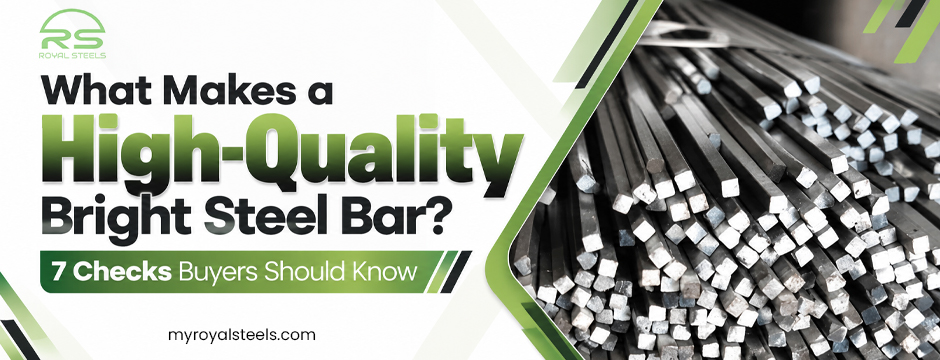
High quality bright steel bars are defined by their dimensional accuracy, surface finish, verified steel grade, chemical composition, straightness, machinability, and quality documentation. Buyers should evaluate these seven factors before placing an order to ensure the material meets their engineering specifications and manufacturing requirements.
Bright steel bars are widely used in automotive components, industrial shafts, fasteners, machinery, and precision-engineered parts. Although their smooth appearance makes them easy to identify, visual inspection alone cannot confirm their quality.
Understanding what to check helps buyers compare materials, reduce machining problems, and select steel products that deliver consistent results.
1. Inspect the Surface Finish
Surface finish indicates how smooth and uniform a bright steel bar is. High quality bright steel bars generally undergo additional processing, such as cold drawing, peeling, or grinding, to improve their surface condition compared with conventional hot-rolled bars.
Inspect the material for deep scratches, visible cracks, pits, and other defects that could affect machining or the finished component.
What to check:
- Uniform surface appearance along the bar.
- No significant visible cracks or deep surface damage.
- A finish suitable for the intended manufacturing process.
- Clear agreement on any required surface-quality limits.
For example, a precision-machined shaft may require tighter surface-quality controls than a component that will undergo substantial material removal.
Remember that a shiny finish does not automatically prove superior steel quality. Internal properties, dimensions, and material certification also matter.
2. Verify Dimensions and Tolerances
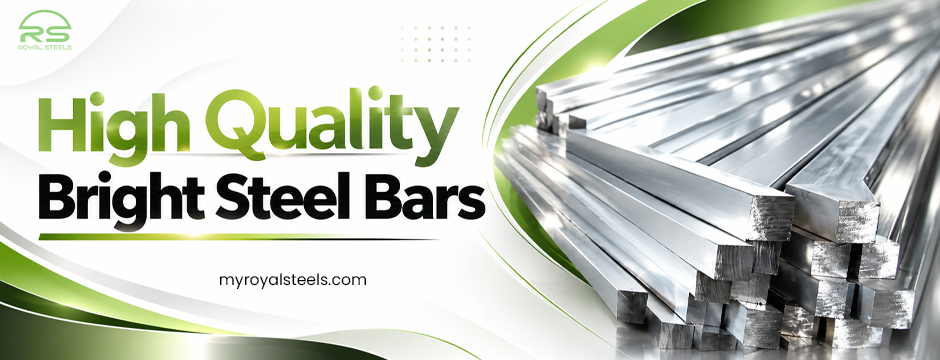
Dimensional accuracy determines whether a steel bar can meet the size requirements of the finished component. Buyers should confirm the diameter or cross-sectional dimensions, length, straightness tolerance, and permitted dimensional variation.
For round bars, measure the diameter at several positions. For square and hexagonal bars, check the relevant side dimensions or distance across flats.
Why does dimensional accuracy matter?
Incorrect dimensions can cause fitting problems, increase machining requirements, and create unnecessary material waste. Therefore, specify the required tolerance rather than relying on the nominal size alone.
For example, if a drawing requires a particular shaft diameter with a defined tolerance, the selected bar must satisfy the relevant dimensional requirements before machining begins.
Also, confirm whether you need fixed cut lengths or standard commercial lengths. This helps align the purchase order with actual production needs.
3. Confirm the Steel Grade and Mechanical Properties
The steel grade identifies a material’s composition and associated requirements. Different grades provide different combinations of strength, hardness, ductility, wear resistance, and heat-treatment response.
Common engineering grades include EN8D, EN19, EN24, EN31, SAE 4140, SAE 52100, and SAE 8620. However, these grades are not interchangeable. Each has specific characteristics and application requirements.
Before purchasing high quality bright steel bars, verify the exact grade specified in your engineering drawing or material specification.
Request a material test certificate where applicable. The checks to prioritise may vary based on the intended application.
- Tensile strength and yield strength.
- Hardness and elongation.
- Heat-treatment condition.
- Compliance with the specified material standard.
For load-bearing shafts, automotive components, and parts exposed to repeated stress, selecting the correct grade is essential. Do not approve a substitute solely because it offers a lower price.
4. Understand Chemical Steel Composition
Chemical Steel Composition refers to the proportions of elements present in a steel grade. Carbon, manganese, silicon, chromium, nickel, and other alloying elements influence properties such as strength, hardenability, toughness, machinability, and wear resistance.
Carbon contributes to steel’s strength and hardness, while manganese influences hardenability and other mechanical characteristics. Chromium can improve hardenability and wear-related performance in suitable alloy steels. The actual result depends on the complete composition, processing conditions, and heat treatment.
Buyers should compare the reported chemical composition with the requirements of the specified grade. A material test certificate can provide evidence of the measured composition and help establish traceability.
For example, the material requirements for a general-purpose fastener may differ considerably from those for a hardened bearing component. Choosing the correct composition helps ensure that the steel is suitable for its intended service conditions.
Explore our guide to [Chemical Steel Composition] to learn more about alloying elements and their influence on material selection.
5. Check Straightness and Bar Consistency
Straightness is particularly important for shafts, spindles, axles, and other components that require accurate alignment.
A bar with excessive curvature may need corrective processing or create difficulties during machining. It can also affect setup accuracy when the material is held in a lathe or another machine tool.
Inspect the bar using an appropriate measuring method and compare the results with the specified straightness tolerance. The acceptable limit should reflect the component’s dimensions, manufacturing process, and intended use.
For bulk orders, assess batch consistency as well. A documented sampling and inspection plan can help identify variations between individual bars or production batches.
This check is especially useful when ordering high quality bright steel bars for repetitive manufacturing operations, where consistent incoming material supports predictable production.
6. Evaluate Machinability and Application Suitability
Machinability describes how readily a material can be cut, drilled, turned, or otherwise processed using suitable tools. It influences tool wear, cutting performance, surface quality, and production efficiency.
The correct bar shape depends on the component being manufactured.
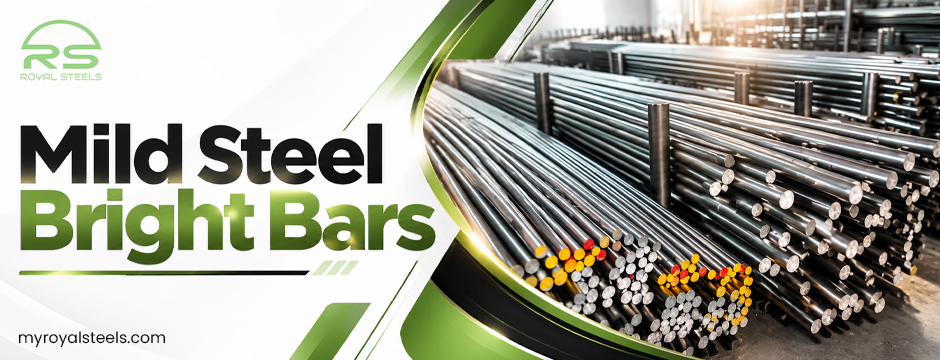
- Round bright bars: Suitable for shafts, axles, bolts, studs, and turned components.
- Square bright bars: Useful for selected fixtures, machinery parts, and material-handling components.
- Hexagonal bright bars: Appropriate for components requiring hexagonal profiles and machining operations.
- Bright steel strips: Used for specific fabricated and machined parts.
The steel grade, hardness, and material condition also affect machining behaviour. Therefore, discuss your manufacturing process before selecting a product.
For general engineering and automotive applications, mild steel bright bars may be suitable when their properties meet the component’s requirements. More demanding applications may require a different grade or material condition.
7. Verify Quality Certificates and Supplier Reliability
Quality documentation helps buyers confirm that the material matches the purchase specification. Supplier reliability also affects delivery planning, batch traceability, and production continuity.
Before confirming an order, check the following:
- Material grade and applicable standard.
- Dimensions, tolerances, and ordered lengths.
- Material test certificates, where required.
- Batch identification and traceability.
- Packaging, storage, and delivery arrangements.
For critical applications, determine whether additional inspection or independent testing is necessary. Certification requirements should reflect the component’s risk level and relevant industry standards.
Discuss availability, customization, minimum order quantities, and lead times before committing to a bulk purchase. Clear communication helps prevent specification errors and unexpected production delays.
A supplier that understands your technical requirements can help you identify suitable sizes, grades, and product forms without compromising the specifications needed for your application.
Choose Royal Steels for Precision-Engineered Bright Steel Bars
Royal Steels delivers high quality bright steel bars designed to meet diverse industrial requirements. Our product range includes round, square, hexagonal, and strip bars, along with cold-drawn mild steel bright bars and precision-engineered shafts. With advanced manufacturing processes, skilled professionals, and strict quality control, we focus on dimensional accuracy, reliable performance, and consistent finishing. Whether you need standard sizes or customized specifications, Royal Steels helps you find suitable steel solutions for automotive, engineering, and manufacturing applications.
Conclusion
Selecting the right high quality bright steel bars requires more than comparing appearance and price. Surface finish, dimensional accuracy, material grade, chemical composition, straightness, machinability, and quality documentation all contribute to a reliable purchasing decision.
Define your technical requirements before requesting a quotation, and verify that the material meets the applicable specification. This approach can help reduce avoidable machining issues, improve purchasing confidence, and support consistent manufacturing quality.
For assistance with steel grades, bar dimensions, and customized product requirements, contact Royal Steels to discuss a suitable solution for your application.
Frequently Asked Questions
What are the main characteristics of a high-quality bright steel bar?
A high-quality bright steel bar meets its specified dimensional tolerances, has a suitable surface finish, conforms to the required steel grade and chemical composition, and satisfies relevant mechanical and straightness requirements. Appropriate quality documentation provides additional verification.
What is the difference between bright steel bars and black steel bars?
Bright steel bars generally undergo additional processing, such as cold drawing, peeling, or grinding, to improve surface finish and dimensional accuracy. Black steel bars are typically hot-rolled and retain a darker surface. The appropriate choice depends on the required tolerances, finishing operations, and application.
Do bright steel bars resist rust?
Bright steel bars made from ordinary carbon or mild steel can rust when exposed to moisture and oxygen. Their smoother surface does not make them inherently corrosion-resistant. Suitable storage, protective coatings, or other specified corrosion-control measures may be necessary.
Which steel grades are used for engineering applications?
Grades such as EN8D, EN19, EN24, EN31, SAE 4140, SAE 52100, and SAE 8620 are used in different engineering applications. The correct selection depends on required mechanical properties, chemical composition, heat treatment, and operating conditions.
What should buyers check before ordering bright steel bars in bulk?
Buyers should confirm the steel grade, dimensions, tolerances, surface finish, straightness, quantity, required certification, packaging, and delivery schedule. These details help ensure that the material meets production requirements.
RAG summaries
Essential Quality Checks for Bright Steel Bars
High quality bright steel bars require careful evaluation before purchase. Buyers should inspect surface finish, dimensional accuracy, straightness, and consistency to ensure the material meets engineering specifications. Verifying the steel grade, mechanical properties, and chemical composition helps determine suitability for specific manufacturing applications. Material test certificates provide valuable evidence of compliance and traceability. These checks help reduce machining difficulties, material waste, and production inconsistencies while supporting reliable performance in automotive, machinery, and precision engineering applications.
Smart Material Selection for Industrial Performance
Selecting the appropriate bright steel bar depends on the component design, manufacturing process, and operating conditions. Round, square, hexagonal, and strip bars serve different engineering purposes. Grades such as EN8D, EN19, EN24, EN31, SAE 4140, and SAE 52100 offer different material characteristics and are not interchangeable. Mild steel bright bars can suit general engineering and automotive components when their properties meet application requirements. Buyers should also consider machinability, dimensional tolerances, corrosion protection, and required material certification before finalising specifications.
Royal Steels: Precision, Reliability and Quality Assurance
Royal Steels offers bright steel bars in multiple shapes and specifications for automotive, engineering, and manufacturing applications. Its product range includes cold-drawn mild steel, bright bars, steel strips, and precision-engineered shafts. The company emphasises manufacturing expertise, quality control, dimensional accuracy, and customised product solutions. Buyers can discuss material grades, required dimensions, cut lengths, documentation, and delivery arrangements to identify suitable steel products. Careful specification checks and dependable supplier communication support informed purchasing decisions and consistent manufacturing outcomes.